
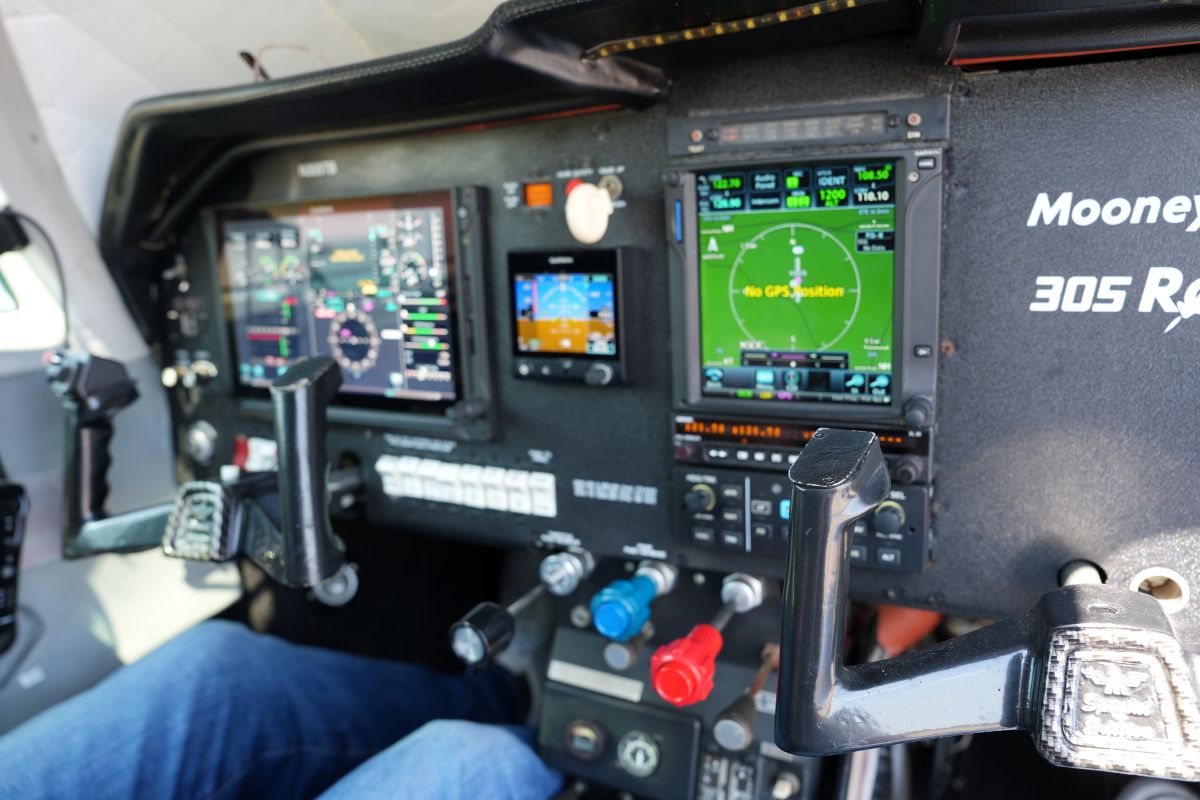
An emergency approach and landing prepares a pilot to manage a loss of engine power or another condition that requires an immediate landing.
The pilot establishes the aircraft-specific best-glide speed, selects the most suitable available landing area, uses altitude and wind to shape a reachable pattern, completes the appropriate checklist, communicates when time permits, and prepares the airplane and occupants for landing.
Title clarification: The current private-pilot ACS task is Emergency Approach and Landing (Simulated). This wording is more accurate than “power-off landing” because the task evaluates the complete emergency decision and approach, not a normal landing performed with the throttle at idle.
Standards note: FAA-S-ACS-6C, Area of Operation IX, Task B supplies the private-pilot evaluation standard. The POH/AFM controls best-glide speed, restart or securing actions, configuration, checklists, and aircraft-specific limitations. Simulated emergencies must be conducted under instructor or evaluator direction with safe recovery margins.
Why Pilots Really Learn This Maneuver
After a significant power loss, altitude becomes a limited energy reserve.
The pilot cannot create more altitude, and every delay, turn, configuration change, or speed error changes what remains reachable.
The maneuver teaches the pilot to:
- Maintain aircraft control before troubleshooting
- Establish the speed that preserves useful glide performance
- Select a landing area that is actually reachable
- Account for wind, terrain, obstacles, surface, and available distance
- Plan a pattern rather than aim directly at one spot without options
- Use the appropriate checklist without losing control of the airplane
- Prepare for landing and communicate as time permits
- Avoid changing the selected field late unless the original choice becomes unusable
A Realistic Scenario
A training airplane experiences a major loss of power several thousand feet above a rural area.
The nearest visible road may look attractive, but closer inspection could reveal wires, traffic, signs, and a crosswind. A farther open field may offer a wider surface, fewer obstacles, and a more manageable approach.
The correct selection depends on altitude, wind, glide distance, terrain, obstacles, aircraft capability, and the pilot’s ability to fly a controlled pattern.
Emergency practice exists to make that decision sequence familiar before surprise and stress compress the available time.
Current FAA Private-Pilot Standards
Under FAA-S-ACS-6C, Area of Operation IX, Task B, the applicant must demonstrate the knowledge, risk management, and flight skills required for a simulated emergency approach and landing.
Aircraft Control
The pilot must establish and maintain the manufacturer-recommended best-glide airspeed within ±10 knots.
The actual best-glide speed comes from the aircraft’s POH/AFM.
Configuration
The airplane must be configured according to the POH/AFM and the existing conditions.
Configuration changes should support the selected glide and landing plan without creating unnecessary workload or reducing available options.
Landing-Area Selection
The pilot must select a suitable landing area based on:
- Available altitude
- Wind
- Terrain
- Obstructions
- Surface characteristics
- Available glide distance
- Aircraft capability
Flight Path
The pilot must plan and follow a flight path to the selected landing area.
The pattern should preserve reachability while allowing the pilot to adjust for altitude, wind, and the selected touchdown area.
Emergency Checklist
The appropriate emergency checklist must be completed while maintaining control of the airplane.
Checklist use should fit the time and altitude available. The pilot should not allow troubleshooting to replace aircraft control or landing preparation.
Landing Preparation
The pilot must prepare for landing as directed by the evaluator and in accordance with the aircraft’s procedure.
This may include configuration, occupant preparation, communications, and aircraft-securement actions specified by the POH/AFM or checklist.
Risk Management
The pilot must manage risks associated with:
- Delayed action
- Unsuitable landing-area selection
- Excessive maneuvering
- Distraction
- Loss of control
- Reduced options close to the ground
The private-pilot ACS does not publish a universal touchdown-point accuracy tolerance for this task. An instructor may use a target area during training, but that target should not be presented as a fixed FAA private-pilot tolerance.
The Real Decisions Inside the Maneuver
Control First
A pilot who immediately looks down for a checklist can allow airspeed, bank, or attitude to deteriorate.
The first priority is controlling the airplane and establishing the aircraft-specific glide condition.
Field Selection Is a Trade, Not a Beauty Contest
The closest field is not always the best field.
The pilot should consider:
- Wind direction and strength
- Length and width
- Slope and surface
- Terrain and surrounding obstacles
- Wires, roads, vehicles, livestock, people, and structures
- The ability to fly a recognizable approach
- The consequences of landing short or long
- Whether another option is likely to remain reachable
The Pattern Protects Judgment
A planned pattern gives the pilot reference points and opportunities to adjust.
Flying directly at the selected point may produce a high, steep arrival or a low approach with no recovery option.
The exact pattern geometry depends on altitude, wind, aircraft performance, the selected field, and instructor technique.
Checklists Must Fit the Time Available
Restart actions, fuel selection, ignition, mixture, carburetor heat, electrical items, communications, transponder use, seat belts, doors, and shutdown preparation are aircraft-specific.
A checklist is useful only when the pilot maintains control and does not spend the remaining altitude focused inside the cockpit.
Key Deviations to Examine
1. Best-Glide Speed Was Delayed or Unstable
Airspeed affects glide performance and controllability.
The debrief should review when the airplane reached the target, how long it remained there, and whether turns or checklist activity caused large deviations.
2. The Selected Field Was Not Actually Reachable
A field may appear close while wind, altitude, terrain, or poor pattern positioning makes it unreachable.
The recorded flight path can be compared with altitude and wind, but a map cannot replace the pilot’s evaluation of obstacles and surface conditions.
3. Too Much Altitude Was Spent Circling or Troubleshooting
Repeated field changes, steep turns, or extended checklist work can remove options.
The debrief should identify the point at which the approach became committed.
4. The Pilot Arrived High Without an Energy Plan
Being high is not automatically safe if the pilot cannot dissipate altitude while preserving alignment and control.
Slips, flaps, S-turns, or other techniques are aircraft- and situation-specific and should be used only under instructor guidance and within POH/AFM limitations.
5. The Pilot Arrived Low After Extending the Pattern
A familiar-looking traffic pattern can become too large in a glide.
Wind can make the downwind and base geometry deceptive, particularly when the pilot does not account for changing groundspeed.
6. The Simulation Continued Below a Safe Recovery Point
Practice must preserve a safe go-around or recovery margin.
The instructor or evaluator determines when to terminate the simulation. Training is not improved by creating an actual low-altitude emergency.
How FlytWERX Supports the Review
For a supported live-flight practice session, FlytWERX can help the student and instructor review:
- eIAS and GPS speed during glide establishment and turns
- Altitude and vertical-speed trends
- Pitch and bank throughout the approach
- Heading, course, ground track, and wind correction
- The 2D or 3D flight path relative to the selected area
- Maneuver feedback
- Instructor grading
- Notes and targets
- Attempt history
The selected field and relevant obstacles should be documented using verified external information and instructor notes.
FlytWERX can display the recorded flight path, but it should not be described as certifying field suitability, terrain clearance, obstacle clearance, or glide performance.
FlytWERX Estimated Indicated Airspeed
For supported live-flight reviews, FlytWERX combines GPS speed, current winds aloft, and temperature to calculate estimated indicated airspeed, or eIAS.
A pilot or instructor can update the wind correction when more representative winds are available for the training area.
Current instructor field observations generally show eIAS about 1 to 3 knots from the airplane’s indicated airspeed when the wind correction is current.
This is a first-party operational observation, not an independently certified accuracy guarantee. Wind changes with altitude and location, stale inputs, maneuvering, sensor limitations, and sampling can increase the difference.
The aircraft’s approved airspeed indicator remains controlling.
Because the ACS best-glide tolerance is based on indicated airspeed, eIAS can strengthen the post-flight discussion but should not be presented as certified proof of exact compliance.
A Practical Emergency-Approach Debrief
- Identify the event point. Determine when the simulated power loss was initiated.
- Measure the first response. Review how long it took to establish a controlled glide and reach the target speed.
- Review field selection. Identify the available options and why the selected area was preferred.
- Overlay wind and altitude. Determine whether the chosen pattern preserved reachability.
- Separate flying from troubleshooting. Review whether checklist activity created speed, bank, or path deviations.
- Find the commitment point. Identify when the pilot stopped changing fields and began preparing for landing.
- Review recovery. Confirm whether the simulation was terminated at the planned safe altitude with a stable go-around or recovery.
- Choose one next objective. Focus on faster speed capture, earlier field selection, a tighter pattern, better checklist division, or improved wind correction.
What the Data Cannot Establish by Itself
FlytWERX cannot independently determine:
- Why power was lost
- Whether restart or securing actions were correct
- Surface condition
- The presence of wires, ditches, people, livestock, or unseen obstacles
- Whether a field was legally or operationally suitable
- The pilot’s visual scan, stress, or decision process
- Actual glide performance beyond the recorded environmental context
- Exact IAS compliance from eIAS alone
- Whether the simulation was conducted with adequate safety margins
The instructor must combine the data with direct observation, the POH/AFM, weather, terrain, the pilot’s explanation, and safe training procedures.
Editorial and Safety Boundary
This article must be reviewed by a named CFI and the FlytWERX product owner before publication.
It does not provide a universal emergency checklist, authorize low-altitude simulation, approve any landing area, or replace the POH/AFM, instructor supervision, ATC, emergency services, or pilot-in-command judgment.
Any published example must use de-identified data and clearly document the planned recovery altitude.
Frequently Asked Questions
Is this the same as a commercial power-off 180 accuracy approach?
No. The private-pilot task is Emergency Approach and Landing (Simulated).
A commercial power-off 180 is a different certification task with different objectives and standards.
What is the private-pilot best-glide tolerance?
The current private-pilot ACS requires the manufacturer-recommended best-glide airspeed to be maintained within ±10 knots.
The actual target speed comes from the airplane’s POH/AFM.
Does the ACS require touching down on a specific point?
The private-pilot emergency-approach task does not publish one universal touchdown-point accuracy tolerance.
An instructor may use a target area during training, but it should not be presented as a fixed FAA private-pilot tolerance.
Can FlytWERX determine which field was safest?
No. FlytWERX can help reconstruct altitude, wind-corrected speed, bank, and flight path.
Field suitability requires visual assessment, terrain and obstacle awareness, surface information, aircraft performance, and pilot judgment.
Can eIAS replace the airspeed indicator after an engine failure?
No. FlytWERX is a training and debrief platform, not a primary flight instrument.
The airplane’s approved airspeed indication and POH/AFM procedure control the flight.
How low should a simulated emergency be continued?
The instructor or evaluator sets a safe recovery point based on the airplane, airport, terrain, weather, regulations, and training objective.
This article does not prescribe a minimum recovery altitude.
- FAA, Airman Certification Standards
https://www.faa.gov/training_testing/testing/acs - FAA, Private Pilot for Airplane Category ACS, FAA-S-ACS-6C, Area of Operation IX, Task B
https://www.faa.gov/training_testing/testing/acs/private_airplane_acs_6.pdf - FAA, Airplane Flying Handbook, Chapter 18: Emergency Procedures
https://www.faa.gov/sites/faa.gov/files/regulations_policies/handbooks_manuals/aviation/airplane_handbook/19_afh_ch18.pdf - FAA, Airplane Flying Handbook
https://www.faa.gov/regulations_policies/handbooks_manuals/aviation/airplane_handbook - FlytWERX product page
https://www.flytwerx.com/ - FlytWERX App Store listing
https://apps.apple.com/us/app/flytwerx/id6758866523 - FlytWERX eIAS methodology and 1-to-3-knot instructor field observation
Product-owner statement supplied July 2026. Publish a public methodology note before external release.