
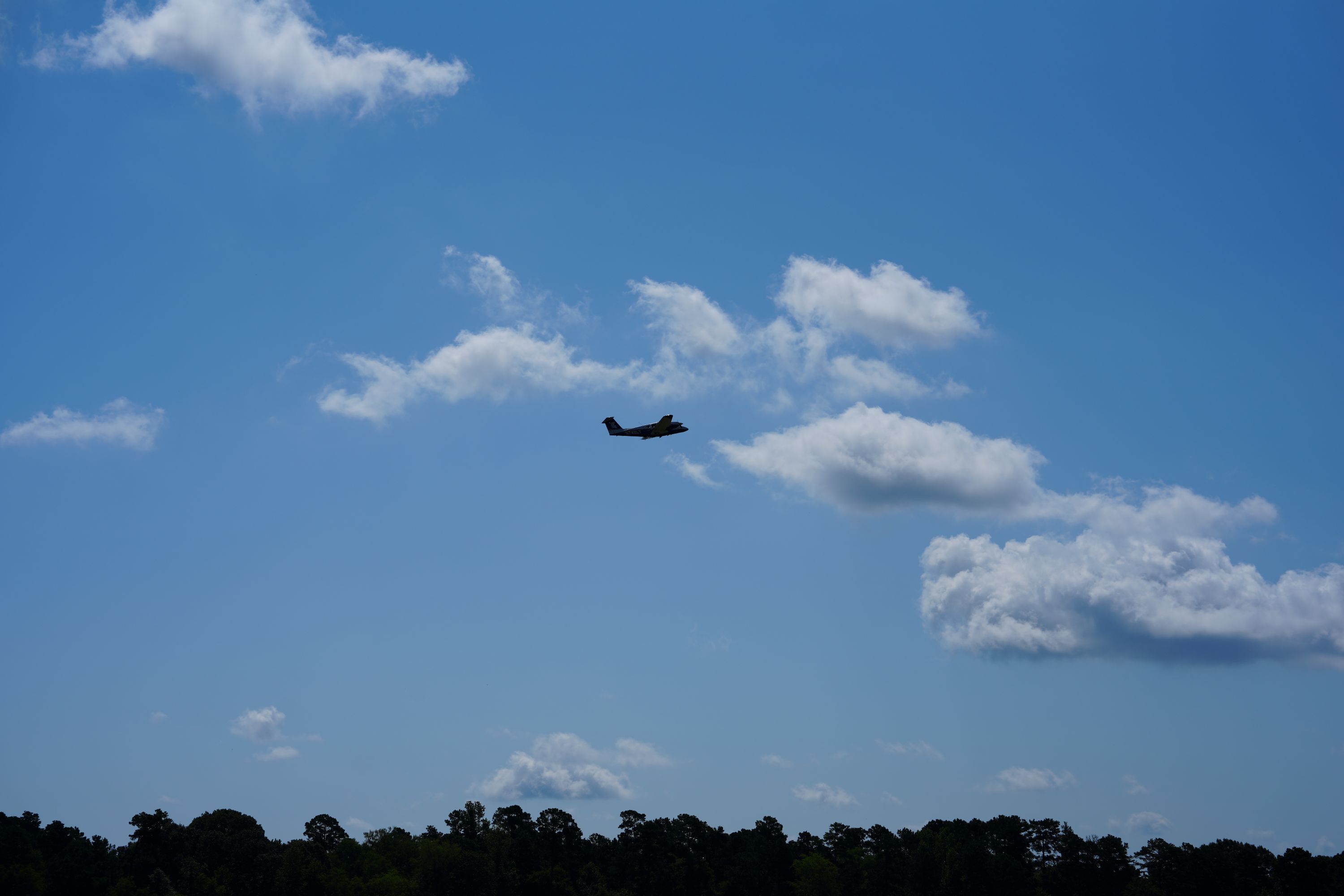
The current Private Pilot Airman Certification Standards do not create a separate crosswind-landing task. Crosswind knowledge, risk management, and control are evaluated within normal, short-field, soft-field, and other applicable landing tasks. For a normal approach and landing, the pilot must maintain appropriate crosswind correction through touchdown, touch down with no side drift, and align the airplane's longitudinal axis with the runway centerline.
Standards note: The figures below summarize FAA-S-ACS-6C, Area of Operation IV, Task B. When a crosswind does not exist during the practical test, the ACS says the applicant's knowledge of crosswind elements must be evaluated orally.
What the FAA is actually evaluating
A crosswind landing is an exercise in controlling two different things at once:
- the airplane's path over the ground must remain aligned with the runway; and
- the airplane itself must be aligned correctly at touchdown, without side drift.
The FAA Airplane Flying Handbook discusses crab and wing-low/sideslip methods. The exact technique and transition depend on the airplane, wind, and instructor guidance. Regardless of method, the private-pilot ACS outcome is clear: maintain directional control and appropriate wind correction throughout the approach and landing, then touch down with no side drift and the longitudinal axis aligned with the runway.
Why pilots really learn this maneuver
Most runways are not aligned perfectly with the wind. Crosswind landing training teaches the pilot to keep the airplane's path over the ground aligned with the runway, align the airplane for touchdown, prevent side drift, and preserve directional control as aerodynamic effectiveness changes during rollout.
Operational example: A pilot returns to a single-runway airport with a meaningful crosswind and no practical runway aligned with it. The pilot must decide whether the conditions are within aircraft and personal limits, maintain a stable approach, prevent drift, align before touchdown, and go around if the control margin deteriorates.
Current FAA Normal-Landing Standards That Apply
Knowledge
Understand stabilized-approach concepts, wind effects, and wind-correction techniques.
Risk Management
Consider crosswind, windshear, tailwind, wake turbulence, runway and surface selection, pilot capability, airplane performance, and available distance.
Approach
Use the recommended configuration, airspeed, and trim. Maintain a stabilized approach.
Airspeed
Use the manufacturer’s published approach airspeed. If none is published, use no more than 1.3 times the stall speed or minimum steady-flight speed in the landing configuration, within +10/-5 knots, with the gust factor applied.
Wind Correction
Maintain directional control and appropriate crosswind correction throughout the approach and landing.
Touchdown
For the normal-landing task, touch down on or within 400 feet beyond the specified point, in the proper pitch attitude, with no side drift and the longitudinal axis aligned with the runway centerline.
Go-Around
Execute a timely go-around if the approach cannot be completed within the standard or if any condition makes the approach or landing unsafe.
The 400-foot figure belongs to the normal approach and landing task. Other landing tasks have their own tolerances. A crosswind does not change the requirement to meet the applicable landing task as a whole.
Key deviations to check in the debrief
This list is standards-based, not a claim about the statistical frequency of each item.
1. Ground track drifted away from centerline
A crab angle can be visually obvious while the ground track remains correct, or the nose can appear aligned while the aircraft drifts sideways. Review both path and alignment rather than judging only one.
2. Alignment was corrected too late
If the airplane reaches the runway with the longitudinal axis misaligned, touchdown can impose side load even when the wheels touch near the centerline.
3. Wind correction was relaxed after touchdown
The ACS requires directional control throughout the landing. Control effectiveness changes as the airplane slows, so the pilot should continue using the aircraft-specific wind-control technique during rollout.
4. The pilot used speed as a substitute for control
An arbitrary increase in speed is not a universal crosswind solution. Use the manufacturer's guidance, the applicable gust adjustment, and instructor direction. Extra energy can increase float and landing distance.
Aircraft-type note: The October 20, 2025 Airplane Flying Handbook Addendum explains that high-drag, low-mass airplanes can decelerate rapidly after power reduction. During a crosswind landing, too little airspeed can reduce rudder or aileron effectiveness and allow the airplane to drift from the desired ground track. The appropriate speed and technique remain aircraft-specific.
5. The approach became a series of large corrections
Late, abrupt changes in bank, heading, pitch, or power can be evidence that the approach was never stabilized. The correct response may be a go-around rather than forcing the landing.
6. The wind exceeded the pilot's plan or capability
The ACS requires runway selection based on pilot capability, aircraft performance and limitations, available distance, and wind. A sound debrief includes the decision to attempt the landing, not only the control technique after the decision.
What flight data can contribute
Useful signals
Available telemetry can help show:
- ground track relative to the extended runway centerline;
- heading or course changes during final and rollout;
- bank and pitch trends;
- altitude and vertical-speed trend;
- groundspeed changes;
- FlytWERX eIAS trend, clearly labeled and reviewed with the active wind correction;
- touchdown position and rollout path.
Important limitations
Flight data from a portable source may not show:
- the exact wind vector at the airplane when local conditions differ from the active correction;
- rudder, aileron, or brake input;
- sideslip angle or lateral tire loading;
- control feel, gust response, or visual references;
- whether the airplane exceeded an aircraft limitation;
- the airplane's direct pitot-static indicated airspeed when only GPS and atmospheric inputs are available.
Data can show that the path moved left or right. It may not prove whether the cause was insufficient correction, a gust, a deliberate avoidance maneuver, an inaccurate runway model, or sensor error. That is why the instructor's observation and the pilot's account remain necessary.
A six-part crosswind debrief
1. Wind and runway choice: What wind information was available, was the selected runway appropriate for the aircraft and pilot, and was the eIAS wind correction current and representative of the training area?
2. Stabilization: At what point were configuration, speed, descent path, and centerline tracking stable?
3. Correction method: What technique was planned, and when was alignment established?
4. Touchdown: Was there side drift? Was the longitudinal axis aligned? Which wheel touched first, and was that consistent with the technique taught for the airplane?
5. Rollout: Was wind correction maintained as speed decreased?
6. Next attempt: Identify one observable correction, such as maintaining centerline track earlier or beginning the alignment transition at a more consistent point.
How FlytWERX can support the review
FlytWERX records available position, heading, course, groundspeed, altitude, vertical speed, pitch, bank, and flight-path data. For supported live-flight sessions, it calculates eIAS from GPS-derived speed, current winds aloft, temperature, and the active wind correction. Better local winds can be entered when available. That gives the student and instructor a shared reconstruction of the approach and rollout, while the instructor still evaluates coordination, control technique, runway clearance, and touchdown feel.
Frequently asked questions
Is there a separate crosswind-landing maneuver in the private-pilot ACS?
No. Crosswind knowledge and control are incorporated into the applicable approach-and-landing tasks.
What does the FAA require at touchdown?
For the normal-landing task, the airplane must touch down in the proper pitch attitude, with no side drift, and with its longitudinal axis aligned with the runway centerline, in addition to meeting the touchdown-zone standard.
Does a crabbed nose mean the airplane is off centerline?
Not necessarily. Heading and ground track are different. A crab can maintain the correct track in wind, but the airplane must be properly aligned and free of side drift at touchdown.
Should a student always add speed in a crosswind?
Follow the POH/AFM, published approach speed, applicable gust guidance, and instructor direction. Do not use an arbitrary speed addition as a universal rule.
When is a go-around appropriate?
Go around when the approach is unstable, alignment or drift cannot be controlled, the runway is not clear, or any condition makes the landing unsafe.
Can FlytWERX eIAS help review a crosswind landing?
Yes. eIAS can add useful airspeed context when the active wind correction is current, especially when reviewed alongside ground track, heading, bank, pitch, and vertical speed. It remains an estimate rather than a direct aircraft-instrument measurement.
Editorial and safety boundary
This article is educational. It does not replace instruction from a qualified flight instructor, the current Pilot's Operating Handbook or Airplane Flight Manual, approved school procedures, or the pilot in command's responsibility for safe operation. FAA practical-test tolerances are evaluation standards for the applicable certificate or rating; they are not a substitute for aircraft-specific procedures or sound judgment.
• FAA Airman Certification Standards page - Federal Aviation Administration
• Private Pilot for Airplane Category Airman Certification Standards, FAA-S-ACS-6C - Federal Aviation Administration
• Airplane Flying Handbook Chapter 9: Approaches and Landings - Federal Aviation Administration
• FlytWERX App Store listing - Apple / Vista Techwerx LLC
• FlytWERX eIAS methodology and instructor field observation - first-party product information supplied by FlytWERX, July 2026
• Airplane Flying Handbook Addendum, October 20, 2025 - Federal Aviation Administration