
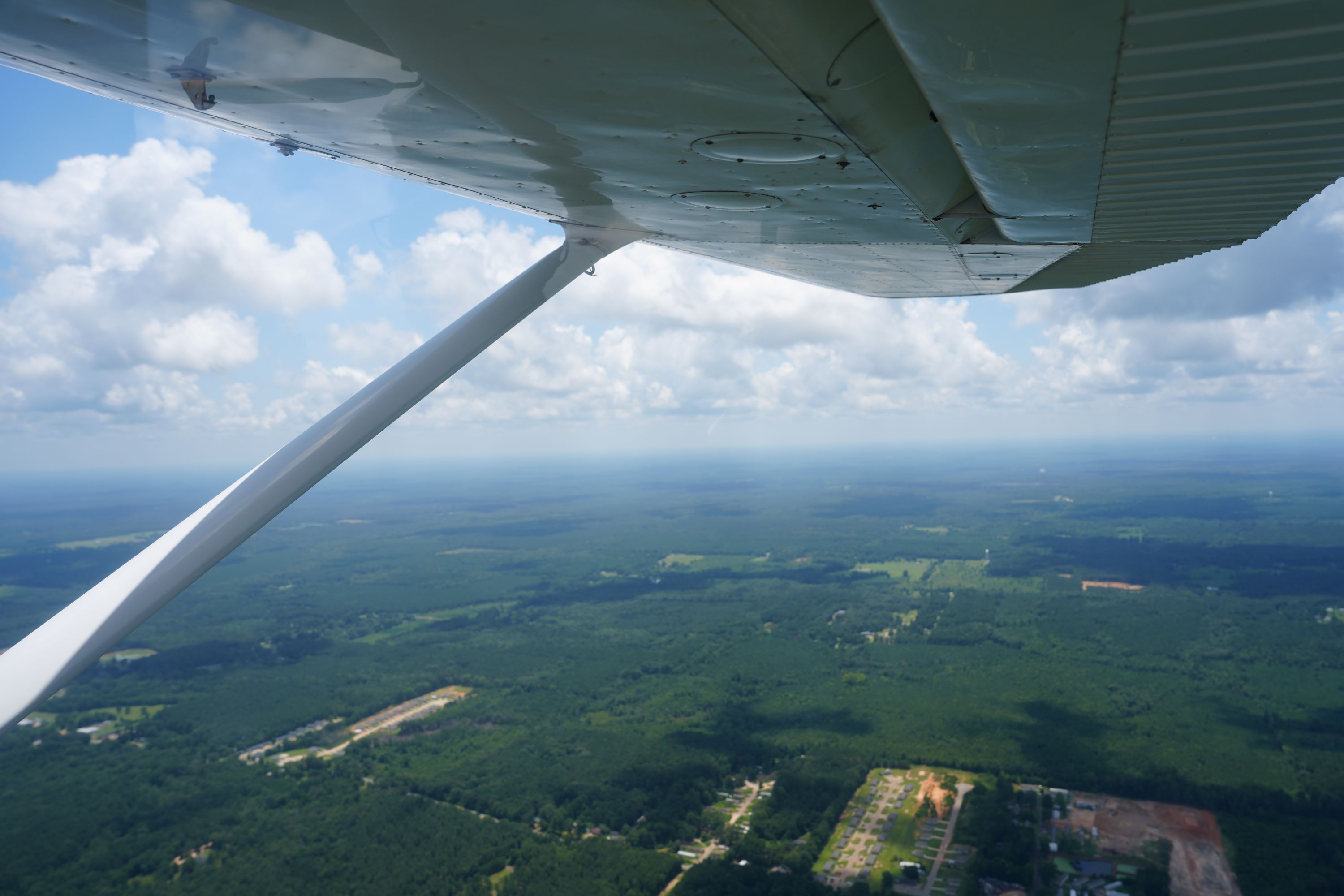
A go-around is a normal risk-management maneuver, not an admission of failure. The FAA describes it as a safe, routine maneuver that discontinues the landing approach and returns the aircraft to a safe altitude and configuration for another approach or another course of action. On the private-pilot practical test, the applicant must make a timely decision, apply takeoff power, establish the appropriate climb attitude and speed, configure the airplane according to the manufacturer, and maintain directional control.
Aircraft-specific rule: The order and timing of pitch, power, flap, gear, and trim actions vary by airplane. The current POH/AFM procedure controls. This article explains the FAA evaluation framework, not a universal cockpit checklist.
When a go-around becomes the correct decision
FAA-S-ACS-6C requires the pilot to plan for and execute a go-around when an approach cannot be completed within the applicable tolerances or when any condition makes it unsafe. The ACS identifies delayed recognition and delayed action at low altitude as specific risks.
Reasons can include:
- an unstable approach;
- excessive height, speed, sink, or lateral displacement;
- loss of centerline or crosswind control;
- traffic, an occupied runway, or an obstruction;
- an unsafe bounce, balloon, or touchdown attempt;
- windshear, a gust, or rapidly changing conditions;
- an ATC instruction;
- uncertainty about whether the landing can be completed safely.
FAA safety material uses 500 feet AGL in VFR as a stabilized-approach decision point in its general-aviation guidance. A school, operator, aircraft, or instructor may use different or additional criteria. The important principle is to establish the decision criteria before the approach and act early when they are not met.
Why pilots really learn this maneuver
Go-around training prepares a pilot to stop treating every approach as if it must end in a landing. The skill matters when an approach becomes unstable, the runway remains occupied, another aircraft begins departing, an obstruction appears, wind changes, ATC issues an instruction, or the pilot is simply no longer certain the landing can be completed safely.
Operational example: An aircraft is still on the runway or begins its takeoff roll as the arriving airplane reaches short final. The arriving pilot goes around early, establishes aircraft control and a safe climb, and then maneuvers laterally when necessary to avoid the conflict or improve runway visibility while following ATC instructions and local procedures.
Current FAA private-pilot go-around standards
Knowledge
Understand stabilized approaches, energy management, wind and density-altitude effects, and wind-correction techniques.
Decision
Make a timely decision to discontinue the approach or landing.
Power and Pitch
Apply takeoff power immediately and transition to the climb pitch attitude for VX or VY, as appropriate, within +10/-5 knots.
Configuration
Configure the airplane after a positive rate of climb is verified or according to the manufacturer’s instructions.
Flight Path
Move to the side of the runway or landing area when necessary to avoid conflicting traffic.
Climb
Maintain VY within +10/-5 knots to a safe maneuvering altitude.
Control
Maintain directional control and proper wind-drift correction throughout the climb.
Procedures
Complete the appropriate checklists, make required radio calls, and use runway-incursion avoidance procedures when applicable.
The ACS also calls out power application, airplane configuration, collision hazards, low-altitude stall/spin/CFIT, distractions, runway incursion, and LAHSO considerations as risk-management elements.
Why a pilot may move to the side of the runway
One practical reason for maneuvering to the side during a go-around is conflicting runway traffic. An aircraft may still be on the runway, may begin departing, or may be difficult to see beneath the nose during the climb.
The first priority remains aircraft control: apply the aircraft-specific go-around procedure, arrest the descent, establish the appropriate climb, and maintain directional control. When necessary to clear conflicting traffic - and after a safe altitude has been attained - a shallow turn toward the appropriate upwind side can improve visibility of the runway and departing aircraft.
This is not an automatic immediate turn after every go-around. The pilot must consider ATC instructions, parallel runways, obstacles, terrain, local procedures, wind, and the position of other aircraft.
Key deviations to check
This is a standards-based review list, not a claim that every item occurs with the same frequency.
1. The decision came late
A pilot may spend valuable time trying to rescue an approach that is already outside the plan. The debrief should identify the first point at which the go-around criteria were met, not only the point at which power was applied.
2. Power was added without controlling pitch or yaw
Power changes can create strong pitch and yaw tendencies. The pilot must maintain control while transitioning to the appropriate climb attitude.
3. Configuration changed before climb performance was established
The ACS requires configuration after a positive rate is verified or in accordance with the manufacturer's procedure. Abrupt or premature configuration changes can degrade performance.
4. The pilot tried to land again after initiating the go-around
FAA safety guidance emphasizes continuing the maneuver after the decision is made. Reversing the decision close to the ground can create a rapidly changing, unstable condition.
5. Airspeed became secondary to task loading
Radio calls, flap movement, trim, traffic, and runway alignment compete for attention. Aircraft control and the POH/AFM sequence remain primary.
6. Wind correction disappeared during the climb
The ACS requires proper drift correction throughout the climb, not just during the approach.
What flight data can show
Available data may help identify:
- the approximate decision point;
- when the descent rate stopped;
- pitch, bank, heading, course, and ground-track changes;
- groundspeed and vertical-speed trends;
- FlytWERX eIAS trend during the transition from descent to climb, with the active wind correction verified;
- lateral movement relative to the runway;
- climb stabilization and subsequent traffic-pattern path.
What flight data may not show
Unless the aircraft or simulator provides the relevant channels, the record may not include:
- throttle position or actual power setting;
- flap, gear, propeller, or trim position;
- the airplane's direct pitot-static indicated airspeed, unless that channel is recorded; FlytWERX eIAS remains a calculated estimate;
- yaw, coordination, or control forces;
- radio calls, checklist use, traffic, or the reason for the decision;
- whether the pilot followed the exact POH/AFM sequence.
A graph may show a delayed climb, but it cannot by itself tell whether the cause was late power, configuration, density altitude, aircraft performance, downdraft, sensor lag, or another factor.
Debrief the maneuver from decision to stabilization
1. Trigger: What condition first made the landing undesirable or unsafe?
2. Decision timing: When was that condition recognized, and how long passed before action?
3. Aircraft control: What happened to pitch, yaw, bank, and runway alignment as power changed?
4. Configuration: Were changes made in the POH/AFM sequence and at the correct performance point?
5. Climb: Was the appropriate speed established and maintained?
6. Airspeed context: Was the eIAS wind correction current and representative, and did the estimate agree reasonably with the airplane indication?
7. Traffic and communication: Was the path predictable, clear of conflict, and consistent with ATC or local procedures?
8. Future rule: What prebriefed criterion will trigger an earlier, more automatic decision next time?
How FlytWERX can support the review
FlytWERX records available altitude, heading, course, groundspeed, vertical speed, pitch, bank, position, and flight-path data and calculates eIAS for supported live-flight sessions using GPS-derived speed, current winds aloft, temperature, and the active wind correction. Those signals can help reconstruct the decision point, when the descent was arrested, how the climb developed, and whether lateral movement occurred. A complete debrief still needs the pilot's reason for the decision, the instructor's observation, the aircraft procedure, and any configuration or power information not present in the data.
Frequently asked questions
Is a go-around a failed landing?
No. The FAA describes a go-around as a safe, routine maneuver. It is the correct decision when the approach or landing cannot be completed safely.
Can ATC instruct a pilot to go around?
Yes. A pilot may initiate a go-around, and air traffic control may also instruct one. The pilot remains responsible for aircraft control and safe operation.
Is 500 feet AGL a universal regulatory go-around gate for VFR pilots?
No. It appears in FAA general-aviation stabilized-approach safety guidance, not as one universal rule for every operation. Follow the applicable aircraft, school, operator, and instructor procedures.
Should flaps be retracted immediately?
Follow the POH/AFM. The correct amount and timing vary by airplane. The ACS requires configuration after a positive rate is verified or according to manufacturer instructions.
What is the private-pilot climb-speed tolerance during the go-around?
The ACS calls for the applicable VX or VY transition within +10/-5 knots and then VY within +10/-5 knots to a safe maneuvering altitude.
Editorial and safety boundary
This article is educational. It does not replace instruction from a qualified flight instructor, the current Pilot's Operating Handbook or Airplane Flight Manual, approved school procedures, or the pilot in command's responsibility for safe operation. FAA practical-test tolerances are evaluation standards for the applicable certificate or rating; they are not a substitute for aircraft-specific procedures or sound judgment.
• FAA Airman Certification Standards page - Federal Aviation Administration
• Private Pilot for Airplane Category Airman Certification Standards, FAA-S-ACS-6C - Federal Aviation Administration
• Airplane Flying Handbook Chapter 9: Approaches and Landings - Federal Aviation Administration
• Go-Arounds Explained - Federal Aviation Administration
• Fly Safe: Prevent Loss of Control Accidents - Stabilized Approaches - Federal Aviation Administration
• FlytWERX App Store listing - Apple / Vista Techwerx LLC
• FlytWERX eIAS methodology and instructor field observation - first-party product information supplied by FlytWERX, July 2026
• Aeronautical Information Manual, effective July 9, 2026, Change 3 - Federal Aviation Administration
• Airplane Flying Handbook Chapter 8: Airport Traffic Patterns - Federal Aviation Administration