
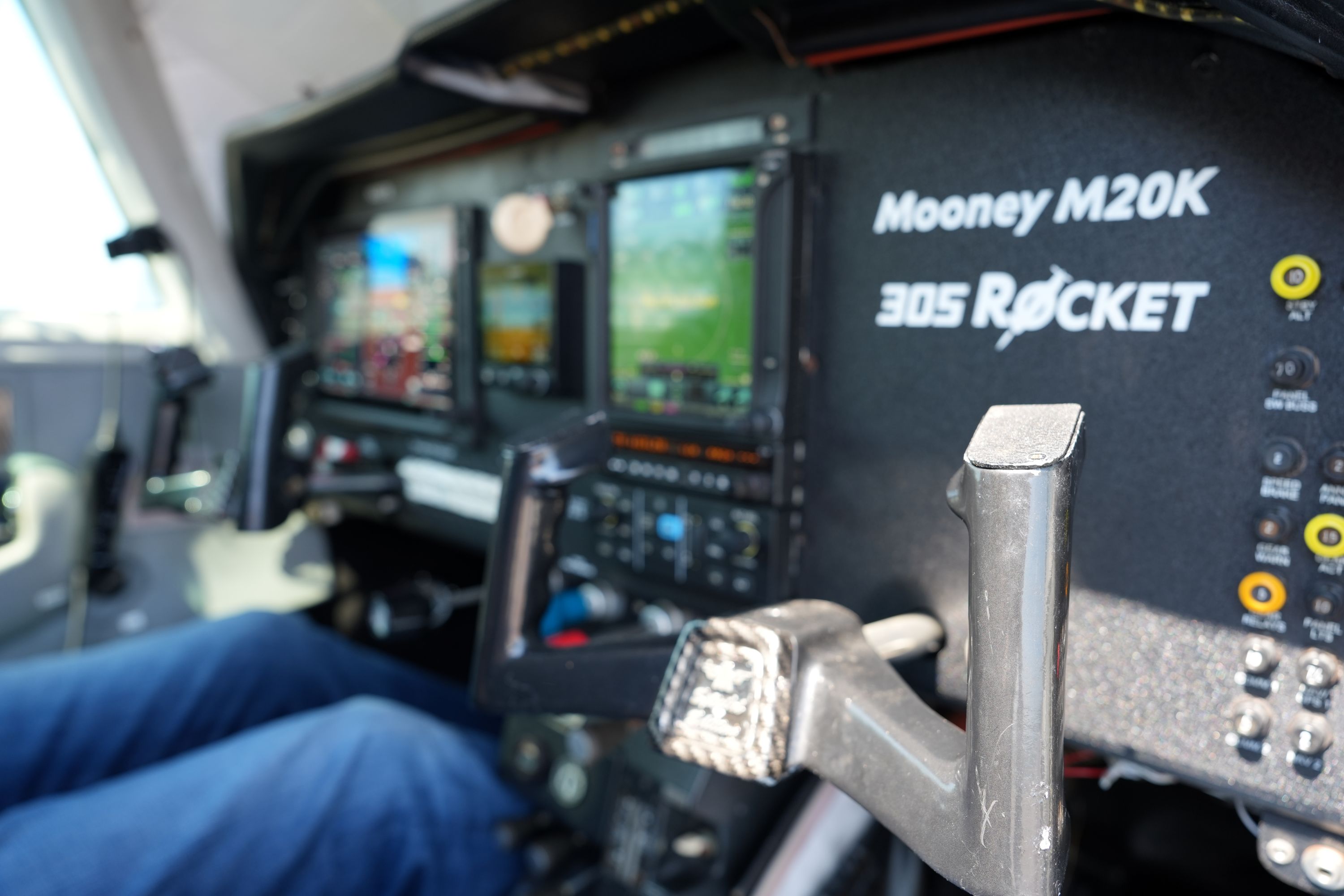
A power-on stall develops recognition and recovery skills for high-angle-of-attack situations associated with takeoff, departure, climb, go-around, and obstacle clearance. The current private-pilot ACS requires a takeoff, departure, or cruise configuration; coordinated flight; a power setting assigned by the evaluator of at least 65 percent, subject to the ACS high-performance-airplane note; a full stall; and recovery using the POH/AFM procedure.
Safety boundary: Intentional stall practice should be conducted only in an approved airplane, at an appropriate altitude, within limitations, and with qualified instruction. Manufacturer procedures take precedence.
Why a power-on stall demands coordination
Power-on entries combine high angle of attack with power-related pitch and yaw effects. In many propeller-driven airplanes, right rudder demand increases as speed decreases and power remains high. A stall accompanied by yaw can progress toward a spin. The pilot must recognize the developing condition, maintain coordination, and recover without delay after the full stall occurs.
The defining aerodynamic event remains critical angle of attack. It is possible to stall at different airspeeds, attitudes, and power settings.
The real situations behind the maneuver
Power-on stall training prepares a pilot to recognize and recover from high-angle-of-attack situations associated with takeoff, departure, climb, go-around, and obstacle clearance. These situations can combine high power, low airspeed, nose-high attitude, increasing yaw tendency, and limited altitude.
Operational example: During a go-around, a pilot adds power but allows pitch to increase too much while airspeed remains low and configuration changes are still in progress. The airplane can approach a power-on stall close to the ground. The training objective is to maintain coordination, control pitch and airspeed, recognize the cues, and reduce angle of attack promptly if a stall occurs.
Current FAA Private-Pilot Power-On Stall Standards
Area
Clear the area before beginning the maneuver.
Minimum Completion Altitude
Complete the maneuver no lower than 1,500 feet AGL in a single-engine airplane or 3,000 feet AGL in a multiengine airplane.
Configuration
Use the takeoff, departure, or cruise configuration assigned by the evaluator and remain coordinated.
Power
Use the evaluator-assigned power setting of no less than 65 percent.
Entry
Transition smoothly from the takeoff or departure attitude to the pitch attitude that induces the stall.
Direction
In straight flight, maintain heading within ±10 degrees. In a turn, use no more than 20 degrees of bank and maintain the specified bank within ±10 degrees while inducing the stall.
Recognition
Acknowledge the impending-stall cues, then recover promptly after a full stall occurs.
Recovery
Use the current POH/AFM recovery procedure.
Completion
Return to the altitude, heading, and airspeed specified by the evaluator.
The ACS appendix allows a lower power setting in some high-performance airplanes when necessary to prevent a pitch attitude greater than 30 degrees nose up. That is an evaluation accommodation, not permission to invent a setting; the evaluator and aircraft procedure control.
No universal altitude-loss limit
As with power-off stalls, the ACS does not prescribe a single altitude-loss value or require the applicant to maintain altitude during recovery. A good review considers recognition, angle-of-attack reduction, coordination, aircraft-specific procedure, secondary-stall avoidance, and return to the desired path.
Key deviations to check
1. The entry was not coordinated
High power and low speed can magnify yaw tendencies. Heading alone may look acceptable while the airplane is slipping or skidding.
2. The pitch was raised abruptly
A rapid pull can produce an accelerated stall or an unrealistic entry. The ACS calls for a smooth transition.
3. The pilot focused on a target airspeed instead of the developing cues
Critical angle of attack causes the stall. Sight, sound, feel, warning devices, and aircraft response all matter.
4. Power was treated as the recovery instead of reducing angle of attack
The handbook warns against attempting recovery with power before reducing angle of attack. High power does not prevent a wing from remaining stalled.
5. The pilot tried to level a dropped wing before unloading it
Aileron use before angle-of-attack reduction can worsen the stall on part of the wing. Follow the POH/AFM sequence and maintain yaw control.
6. The pullout produced a secondary stall
Returning to the climb too aggressively before sufficient airspeed and control effectiveness return can exceed critical angle of attack again.
7. Task loading displaced traffic awareness
The ACS includes collision hazards, distraction, prioritization, and loss of situational awareness as risk elements.
What flight data can help show
Depending on the source, review:
- pitch buildup and maximum recorded pitch;
- heading and bank stability during entry;
- altitude and vertical-speed response;
- the timing and shape of the recovery;
- wing-drop or heading-change indications;
- return to the assigned path;
- FlytWERX eIAS trend during entry and recovery, with the active wind correction verified;
- groundspeed and any direct aircraft airspeed source, labeled correctly and distinguished from eIAS.
What the data may not show
A typical portable record may lack:
- critical angle of attack;
- the full-stall event;
- stall warning, buffet, or control feel;
- rudder input, yaw rate, or slip/skid;
- actual power percentage;
- flap, gear, trim, or propeller setting;
- compliance with the exact POH/AFM recovery sequence.
A high pitch angle is not, by itself, proof of a stall. A low airspeed is not, by itself, proof of a stall. The aerodynamic condition and aircraft cues matter.
A power-on stall debrief
1. Setup: Was the area clear, altitude adequate, and assigned configuration correct?
2. Power: What setting was used, and was it consistent with the evaluator/instructor and aircraft guidance?
3. Coordination: How were yaw and bank controlled as speed decreased?
4. Recognition: Which cues identified the impending and full stall?
5. Recovery priority: Was angle of attack reduced promptly?
6. Wings and yaw: Were they managed after the wing began flying again, without aggravating the stall?
7. Return: Was the airplane returned smoothly to the desired flight path without a secondary stall?
8. eIAS quality: Did the wind correction and temperature input support a reasonable eIAS estimate during the entry and recovery?
9. Next focus: Select one observable correction for the next repetition.
How FlytWERX can support the review
FlytWERX provides power-on and other stall maneuver tracking along with available altitude, heading, groundspeed, vertical speed, pitch, bank, course, position, and flight-path data. For supported live-flight sessions, it also calculates eIAS using GPS-derived speed, current winds aloft, temperature, and the active wind correction. These fields can make entry and recovery timing easier to reconstruct. They should not be used to claim an unrecorded angle of attack, power setting, stall cue, or coordination state.
Frequently asked questions
What situations does a power-on stall represent?
It develops recognition and recovery skills for stalls associated with takeoff, departure, climb, go-around, and obstacle-clearance situations.
How much power is used on the private-pilot task?
The evaluator assigns a setting of at least 65 percent power. The ACS allows a lower setting in some high-performance airplanes to avoid pitch attitudes above 30 degrees nose up.
Is a power-on stall caused by low airspeed?
The stall occurs when critical angle of attack is exceeded. Low speed is often part of the setup, but the aerodynamic cause is angle of attack.
What should happen first in the recovery?
Reduce angle of attack according to the POH/AFM procedure.
Does the FAA set a maximum altitude loss?
No single predetermined altitude-loss value is specified for the recovery.
Editorial and safety boundary
This article is educational. It does not replace instruction from a qualified flight instructor, the current Pilot's Operating Handbook or Airplane Flight Manual, approved school procedures, or the pilot in command's responsibility for safe operation. FAA practical-test tolerances are evaluation standards for the applicable certificate or rating; they are not a substitute for aircraft-specific procedures or sound judgment.
• FAA Airman Certification Standards page - Federal Aviation Administration
• Private Pilot for Airplane Category Airman Certification Standards, FAA-S-ACS-6C - Federal Aviation Administration
• Airplane Flying Handbook Chapter 5: Maintaining Aircraft Control - Federal Aviation Administration
• AC 61-67C: Stall and Spin Awareness Training with Changes 1 and 2 - Federal Aviation Administration
• FlytWERX App Store listing - Apple / Vista Techwerx LLC
• FlytWERX eIAS methodology and instructor field observation - first-party product information supplied by FlytWERX, July 2026