
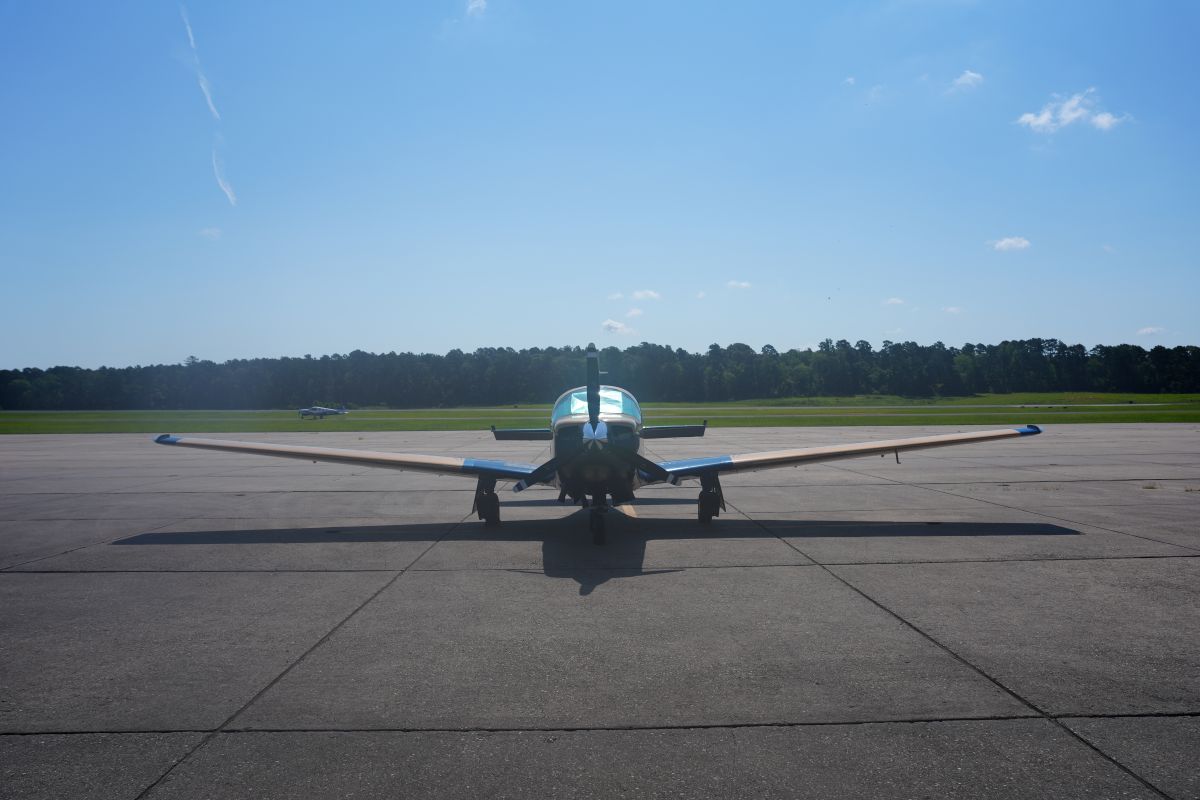
A no-flap landing prepares a pilot to land when flaps are unavailable, remain retracted, or cannot be used as planned. Without the normal flap configuration, the airplane may require a different approach speed, pitch attitude, descent plan, touchdown point, and runway-distance margin.
The exact procedure is not universal. The current POH/AFM and instructor guidance control every aircraft-specific decision.
ACS accuracy note: FAA-S-ACS-6C does not list “no-flap landing” as a separate private-pilot task with its own universal speed or touchdown tolerance. The ACS includes system and equipment malfunctions, including flap malfunctions, within Emergency Operations. An evaluator may assess the pilot’s knowledge, risk management, checklist use, and ability to manage the condition safely. Do not invent a no-flap ACS tolerance that the document does not publish.
Why Pilots Really Learn This Maneuver
Flaps are useful, but a pilot should not become dependent on one normal configuration. A flap system can fail mechanically or electrically, stop at an unexpected position, disagree with the cockpit indication, or become unavailable because the POH/AFM directs the pilot not to use it under a particular malfunction.
The training has several practical purposes:
- Recognize that the normal landing picture may change. The sight picture, pitch attitude, descent angle, and float can differ from a full-flap approach.
- Use the correct aircraft-specific speed. A no-flap landing often requires a higher approach speed than a normal full-flap landing, but the actual number must come from the POH/AFM.
- Plan for additional runway. Lower drag and higher speed can increase float and landing distance.
- Avoid improvising after a malfunction. Checklist use, flap-position confirmation, and runway selection matter more than trying to reproduce the normal approach.
- Preserve the go-around option. A no-flap go-around may have a different workload or configuration sequence than the normal procedure.
A Realistic Scenario
On downwind, the pilot selects flaps but does not see the expected indication or change in airplane response.
The wrong reaction is to keep cycling the switch without a plan while descending toward the runway. The pilot should maintain control, use the applicable checklist, determine the known or suspected flap condition, advise ATC when appropriate, select a runway with suitable wind and length, and fly the POH/AFM procedure.
A no-flap practice session builds familiarity before a real malfunction adds surprise and workload.
What the FAA Standards Do—and Do Not—Say
The private-pilot ACS does not establish a standalone no-flap landing task with one universal speed, procedure, or touchdown tolerance.
Systems and Equipment Malfunctions
Under Emergency Operations, the pilot must demonstrate knowledge, risk management, and appropriate action for system or equipment problems, including landing-gear or flap malfunctions.
Normal Approach and Landing Principles
The normal approach and landing task provides the baseline expectations that still apply:
- Verify the correct runway or landing surface
- Scan for traffic and obstructions
- Maintain a stabilized approach
- Manage airspeed and energy
- Apply appropriate wind correction
- Maintain directional control
- Touch down with proper alignment
- Execute a timely go-around when necessary
Risk Management
The pilot must consider runway length and condition, wind, traffic, obstacles, system status, distraction, and the risk of low-altitude loss of control.
Aircraft-Specific Procedure
The POH/AFM and approved checklist supply the correct speed, limitations, configuration, abnormal procedure, and any required changes to landing technique.
There is no single FAA-published private-pilot no-flap speed, flap-failure checklist, or touchdown-distance tolerance that applies to every airplane.
How No Flaps Can Change the Landing
Flaps normally increase lift and drag and allow many airplanes to approach at a lower speed and steeper descent angle.
With flaps unavailable, an airplane will often:
- Use a higher approach speed
- Require a lower-drag, flatter flight path for the same power setting
- Float farther if excess speed is carried into the flare
- Need more runway for landing and stopping
- Present a different pitch attitude and visual picture
- Require more planning to avoid a high, fast, or unstable arrival
These are general aerodynamic effects, not a substitute for the airplane’s published procedure.
Some airplanes have specific partial-flap or no-flap instructions, and an asymmetric flap condition may require a very different response.
Key Deviations to Examine
1. The Actual Flap Condition Was Never Established
A switch position does not always prove surface position.
The pilot should use available indications, aircraft response, checklist guidance, and visual confirmation only when appropriate and safe.
The debrief should distinguish between a planned no-flap landing and a suspected malfunction with an unknown flap position.
2. The Pilot Used the Normal Full-Flap Speed by Habit
A speed that is correct for the normal configuration may be inappropriate without flaps.
The aircraft-specific target should be identified and briefed before the approach.
3. Excess Speed Was Carried Into the Flare
A few extra knots can produce meaningful additional float, especially in a low-drag configuration.
Review the entire final-approach trend rather than focusing on the speed at only one point.
4. The Approach Became Too Flat or Too Long
Trying to preserve a familiar visual angle with an unfamiliar configuration can lead to power and pitch changes that destabilize the approach.
Runway length and touchdown-zone discipline become more important.
5. The Pilot Fixated on the Malfunction
Checklist use and configuration awareness matter, but the pilot must still maintain traffic scan, runway alignment, wind correction, and aircraft control.
6. A Go-Around Was Delayed
If the approach is high, fast, unstable, misaligned, or a conflict exists on the runway, the pilot should not continue merely to complete the no-flap exercise.
The go-around should follow the POH/AFM and ATC instructions.
How FlytWERX Supports the Review
A supported FlytWERX recording can help the pilot and instructor examine how the altered configuration affected the approach.
Useful fields and views can include:
- Estimated indicated airspeed and GPS speed
- Altitude and vertical-speed trends
- Pitch and bank trends
- Heading, course, ground track, and wind correction
- Flight path and 3D visualization
- Stability and rollout-accuracy information when available
- Instructor grading, notes, targets, and attempt history
The flap condition should be documented in the lesson or instructor notes because FlytWERX should not be assumed to know the physical flap position from general phone, tablet, or portable-receiver telemetry.
Comparing a no-flap practice approach with a normal approach can be useful only when the aircraft, runway, wind, weight, and target procedure are clearly documented.
FlytWERX Estimated Indicated Airspeed
FlytWERX creates estimated indicated airspeed, or eIAS, for supported live-flight reviews using GPS speed, current winds aloft, and temperature.
When more representative wind information is available for the training area, the pilot or instructor can update the wind correction.
Current instructor field observations generally show eIAS about 1 to 3 knots from the airplane’s indicated airspeed when the wind correction is current.
This is a first-party operational observation, not an independently certified accuracy guarantee. Wind changes close to the runway, stale inputs, gusts, sensor behavior, and maneuvering can increase the difference.
The airplane’s approved IAS remains controlling in flight.
For a no-flap landing, where a small amount of excess speed can contribute to additional float, eIAS can strengthen the debrief. It should not be used to claim exact compliance without panel IAS, verified inputs, and instructor context.
A Practical No-Flap Debrief
- State the condition. Was this a planned no-flap exercise, confirmed flap failure, partial-flap condition, or unknown indication?
- Confirm the source. Identify the POH/AFM procedure and target speed used.
- Review the runway decision. Determine whether the runway provided suitable length and wind alignment.
- Examine the final trend. Review eIAS, vertical speed, flight path, bank, and alignment.
- Review the flare and float. Determine whether excess speed or reduced drag moved the touchdown farther than intended.
- Evaluate the go-around decision. Confirm whether it was briefed and whether it would have been initiated early enough.
- Choose one next-step objective. Focus on configuration confirmation, speed discipline, approach planning, or earlier go-around recognition.
What the Data Cannot Establish by Itself
FlytWERX cannot independently determine:
- Actual flap-surface position or asymmetry
- Flap-motor, circuit, switch, or mechanical condition
- The correct checklist for the aircraft
- The pilot’s visual scan or cockpit workload
- Runway braking action or stopping distance
- Control forces and trim workload
- Whether the approach should have been continued
- Exact compliance with panel IAS from eIAS alone
The instructor must combine the recording with aircraft indications, checklist use, pilot observation, and the POH/AFM.
Editorial and Safety Boundary
A named CFI and the FlytWERX product owner must review this article before publication.
It does not provide a checklist, prescribe a speed, authorize practice after an actual malfunction, or replace the POH/AFM, approved school procedures, ATC instructions, or pilot-in-command judgment.
Any product screenshot should clearly state the documented flap condition and environmental inputs.
Frequently Asked Questions
Is a no-flap landing a separate private-pilot ACS task?
No. The current private-pilot ACS includes flap malfunction within systems and equipment malfunctions but does not publish a standalone no-flap landing task with one universal tolerance.
What approach speed should I use without flaps?
Use the speed specified by the current POH/AFM or approved checklist for the actual condition.
Do not copy a speed from another airplane or assume the normal full-flap target applies.
Does no flaps always mean a longer landing?
A no-flap configuration commonly increases approach speed, float, and runway required.
The actual effect depends on the airplane, weight, wind, runway, technique, and manufacturer data.
Can FlytWERX detect that the flaps failed?
Do not assume so.
FlytWERX can help review the resulting flight data, but flap position and malfunction status should be confirmed through aircraft indications, checklist procedures, pilot observation, and lesson notes.
Can eIAS show why the airplane floated?
It can help show whether speed remained above the target, especially when the wind correction is current.
Float also depends on pitch, power, configuration, ground effect, runway slope, wind, and pilot technique, so the cause requires instructor interpretation.
Should a student practice no-flap landings solo?
That decision belongs to the student’s instructor and must follow endorsements, school policy, aircraft limitations, weather, airport conditions, and the student’s demonstrated competence.
This article is not authorization for solo practice.
- FAA, Airman Certification Standards
https://www.faa.gov/training_testing/testing/acs - FAA, Private Pilot for Airplane Category ACS, FAA-S-ACS-6C, Area of Operation IX, Task C, and Area of Operation IV, Task B
https://www.faa.gov/training_testing/testing/acs/private_airplane_acs_6.pdf - FAA, Airplane Flying Handbook, Chapter 9: Approaches and Landings
https://www.faa.gov/sites/faa.gov/files/regulations_policies/handbooks_manuals/aviation/airplane_handbook/10_afh_ch9.pdf - FAA, Airplane Flying Handbook
https://www.faa.gov/regulations_policies/handbooks_manuals/aviation/airplane_handbook - FlytWERX product page
https://www.flytwerx.com/ - FlytWERX App Store listing
https://apps.apple.com/us/app/flytwerx/id6758866523 - FlytWERX eIAS methodology and 1-to-3-knot instructor field observation
Product-owner statement supplied July 2026. Publish a public methodology note before external release.