
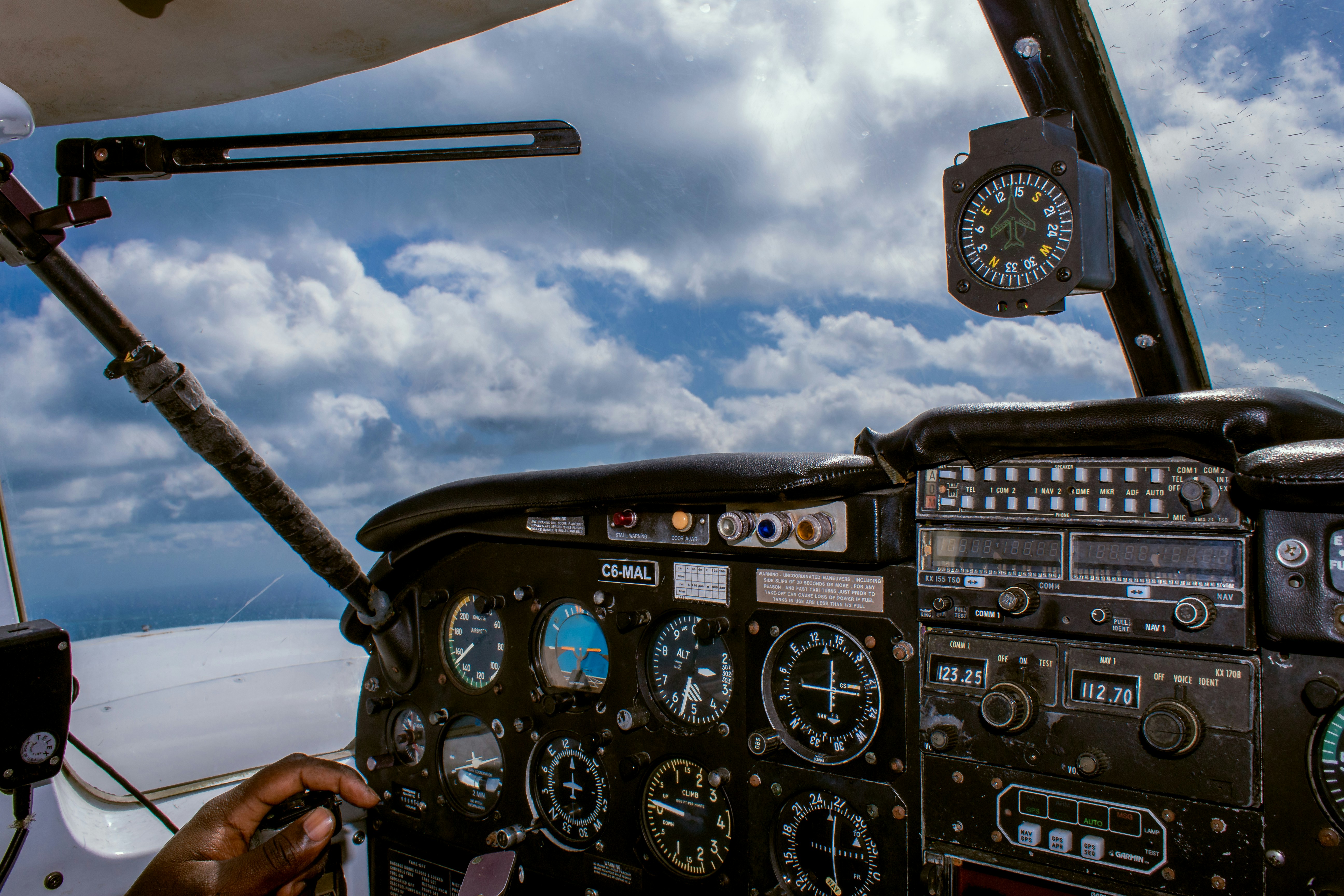
A productive student-pilot solo flight is not an unsupervised attempt to practice everything. It is an instructor-authorized flight with a narrow objective, clear operating limits, an appropriate weather and aircraft plan, defined stop conditions, and a structured postflight review. The goal is to reinforce skills the student has already been trained and endorsed to perform - not to experiment with new maneuvers or exceed the instructor's limitations.
Regulatory boundary: A student pilot may not operate solo unless the requirements of 14 CFR 61.87 and other applicable regulations and endorsements are met. The authorized instructor must have trained and judged the student proficient and safe in the required maneuvers and procedures. The solo endorsement is aircraft-specific and must be current within the preceding 90 days. Instructor logbook limitations are binding.
Why solo practice often becomes unproductive
A student may launch with a vague plan such as "work on landings" or "practice maneuvers." That sounds reasonable, but it creates several problems:
- too many objectives compete for attention;
- the student may repeat the same weak technique without feedback;
- changing weather or traffic may make the original plan inappropriate;
- fatigue can build before the student recognizes diminishing returns;
- the flight may produce memories but little usable evidence of what improved;
- the student may continue because money and airplane time have already been committed.
A strong solo plan is specific enough to guide the flight and flexible enough to stop when conditions no longer support the objective.
What the regulations require before solo
Under 14 CFR 61.87, a student pilot must receive and log the required training and demonstrate satisfactory proficiency and safety, as judged by an authorized instructor, in the applicable aircraft or a similar make and model. For a single-engine airplane, the required training includes takeoffs and landings, straight-and-level flight, turns, climbs and climbing turns, traffic patterns, collision and wake avoidance, descents, slow flight, stalls, emergency procedures, ground-reference maneuvers, simulated engine-failure approaches, slips, and go-arounds.
The regulation does not mean that every solo flight should include every item. It establishes the training foundation the instructor must evaluate before solo authorization.
Section 61.87 also requires a current solo endorsement for the specific make and model. Section 61.89 limits student solo operations. Among other restrictions, a student may not carry a passenger, fly for compensation or hire or in furtherance of a business, operate with flight or surface visibility below 3 statute miles during the day or 5 statute miles at night, fly without visual reference to the surface, or operate contrary to limitations placed in the logbook by an authorized instructor.
Other operations may require additional training and endorsements. The student and instructor should verify all applicable regulations, airspace, airport, cross-country, night, and aircraft requirements before the flight.
Start with an instructor-approved objective
A useful objective is observable and limited.
Weak objective:
Practice landings.
Stronger objective:
Fly up to five normal approaches and landings at the approved airport, focusing on a stabilized final and an early go-around whenever the approach no longer meets the instructor's stated criteria.
Weak objective:
Work on steep turns.
Stronger objective:
Complete two approved steep-turn attempts in each direction at the assigned altitude, focusing on stabilizing bank before moving attention to the other performance instruments.
The instructor should confirm that the objective is appropriate for solo practice, within the endorsement and limitations, and suitable for the expected conditions.
Build the flight around seven decisions
1. What exact skill will be practiced?
Limit the primary objective to one maneuver family or one control problem. A secondary objective may be included only if it does not overload the flight.
2. Where will it be practiced?
Identify the approved airport, practice area, altitude block, airspace, route, and any instructor restrictions. Consider terrain, obstacles, traffic density, noise-sensitive areas, and emergency landing options.
3. What conditions are acceptable?
Use the instructor's personal-minimum and endorsement limits as controlling boundaries. Consider wind, crosswind, gusts, ceiling, visibility, turbulence, temperature, density altitude, runway conditions, sun angle, and changing forecasts.
A legal condition is not automatically an appropriate training condition.
4. What is the setup standard?
Define altitude, heading, airspeed, configuration, clearing procedure, and any lesson-specific target. The current POH/AFM and instructor guidance control.
5. How many attempts are planned?
Set a reasonable maximum before takeoff. More repetitions are not automatically better. Stop when performance deteriorates, fatigue rises, conditions change, or the objective has been met.
6. What are the stop or change conditions?
Examples include:
- wind or weather exceeds the instructor's limit;
- the runway or practice area becomes too busy;
- aircraft indications are abnormal;
- the student cannot maintain situational awareness;
- two attempts show the same unresolved problem;
- fatigue, frustration, airsickness, or task saturation develops;
- fuel or time reaches the preplanned limit;
- the approach becomes unstable and requires a go-around;
- the student becomes unsure whether an action is authorized.
7. How will the flight be debriefed?
Plan the review before flying. Record the objective, expected standard, wind information, and the one variable or sequence the student wants to examine afterward.
A realistic solo-practice scenario
A student has been authorized to practice normal landings at the home airport within stated wind and traffic limits. The student plans six landings but writes an additional rule: after two consecutive approaches that require late, large corrections, the student will stop the pattern work, land, and debrief rather than continuing to reinforce the problem.
On the third approach, traffic spacing creates a rushed base-to-final turn. The student recognizes that the approach is not stable and goes around. On the fourth, the same spacing problem begins again. Instead of forcing the remaining planned repetitions, the student completes one normal pattern, lands, and reviews the sequence with the instructor.
That is productive practice even though the student completed fewer landings than planned. The flight reinforced judgment, go-around use, and recognition of a recurring setup problem.
Use scenarios, not just repetitions
The FAA-Industry Training Standards program emphasizes scenario-based training that prepares pilots to manage real-world challenges rather than training only to pass a practical test. A solo practice plan can apply that principle within the student's authorization.
For example, instead of flying an isolated turn to a heading, the approved scenario might be:
After clearing the area, climb to the assigned altitude, turn to an assigned heading, level off, and stabilize as though complying with an ATC instruction.
The scenario should remain simple, safe, and already trained. It should not create simulated emergencies, distractions, or abnormal operations that the instructor has not specifically authorized.
How FlytWERX supports solo practice
FlytWERX can help connect an instructor-approved plan to the postflight evidence. Publicly described capabilities include maneuver selection, shared student-instructor progress, targets, flight capture, maneuver history, deviation review, replay, scores, notes, and postflight analysis.
A practical workflow is:
Before the flight
- confirm the instructor-approved objective and standard;
- select the appropriate maneuver or lesson target;
- verify aircraft and telemetry setup while on the ground;
- update representative wind information when appropriate for eIAS review;
- confirm that using the device will not create distraction or interfere with required equipment and procedures.
During the flight
Fly the airplane first. Do not interact with the application in a way that creates a heads-down distraction, especially during taxi, takeoff, landing, low-altitude maneuvering, traffic conflicts, or abnormal situations. Follow school policy, instructor guidance, regulations, and safe cockpit procedures.
After the flight
- review the attempt sequence and first meaningful deviation;
- compare the result with the stated objective;
- note what the student recognized in real time;
- record questions for the instructor;
- select one correction for the next approved session;
- share or review the flight with the instructor as the current product workflow permits.
FlytWERX does not authorize the solo, approve the weather, clear the practice area, or decide whether the student is ready to continue.
FlytWERX estimated indicated airspeed
For supported live-flight reviews, FlytWERX calculates eIAS using GPS speed, current winds aloft, and temperature. The pilot or instructor can update the wind correction using more representative winds for the training area.
FlytWERX instructors have generally observed eIAS averaging about 1 to 3 knots from the airplane's indicated airspeed when the wind correction is current. This is a first-party field observation, not an independent certification or guaranteed specification. Local wind, stale inputs, changing altitude or position, maneuvering, sensor behavior, sampling, and aircraft-instrument error can increase the difference. The airplane's approved airspeed indication remains controlling.
For a solo debrief, eIAS can help reconstruct speed trends, but the student should never use the postflight estimate as a substitute for monitoring the aircraft's instruments in flight.
A one-page solo practice brief
Before launch, the student and instructor can use this structure:
Item / Planned entry
• Primary objective: One specific skill or maneuver family
• Authorized location: Airport, practice area, route, altitude block
• Aircraft: Specific make/model and required documents
• Instructor limitations: Wind, runway, visibility, ceiling, time, area, or other limits
• Target standard: ACS, school, POH/AFM, or instructor target
• Maximum attempts: Predetermined number or time limit
• Stop conditions: Weather, traffic, performance, fatigue, fuel, abnormal indications
• Data review focus: One or two variables or sequence questions
• Instructor follow-up: How and when the flight will be reviewed
This is a planning aid, not an endorsement. The actual logbook endorsements and regulatory requirements still apply.
What FlytWERX data cannot establish by itself
FlytWERX cannot independently determine:
- whether the student had all required endorsements;
- whether the flight complied with every regulation and instructor limitation;
- whether the weather, runway, aircraft, airspace, or traffic was appropriate;
- whether the student maintained an adequate visual scan;
- whether maneuvers were aerodynamically coordinated;
- exact cockpit IAS from eIAS alone;
- whether the student should have discontinued earlier;
- whether an abnormal indication or aircraft condition existed;
- whether the flight demonstrated readiness for additional privileges.
Those decisions belong to the instructor and pilot under the applicable rules and procedures.
Editorial and safety boundary
A named CFI, a reviewer familiar with current Part 61 requirements, and the FlytWERX product owner must review this article before publication. This is educational content, not legal advice or a solo endorsement. Verify the current eCFR, all applicable endorsements, school procedures, airport and airspace requirements, POH/AFM, weather, and instructor limitations before flight.
Frequently asked questions
Can a student pilot choose any maneuver to practice solo?
No. The flight must remain within the student's training, endorsements, aircraft authorization, instructor limitations, and applicable regulations. New or higher-risk maneuvers should be introduced and supervised by a qualified instructor.
How many repetitions should a solo practice flight include?
There is no universal number. Set a maximum based on the maneuver, conditions, aircraft, fatigue, fuel, and instructor guidance. Stop when performance or situational awareness deteriorates.
What makes a solo objective useful?
It identifies one skill, the conditions, the target standard, and the stop rule. "Practice landings" is vague; "practice up to five normal landings with an early go-around when the approach no longer meets the instructor's criteria" is more actionable.
Can FlytWERX authorize or grade my solo flight?
No. FlytWERX can capture and organize training evidence. A qualified instructor provides endorsements, limitations, interpretation, and progression decisions.
Should I review the flight before talking with my instructor?
Self-assessment can be valuable. Record what you noticed and your questions, then review the attempt with your instructor. Do not treat self-analysis as a substitute for instructor feedback.
What if the weather is legal but outside my instructor's limit?
Do not fly contrary to instructor logbook limitations. Legal minimums are not permission to exceed personal, school, aircraft, or endorsement limits.
- Electronic Code of Federal Regulations, 14 CFR 61.87, Solo requirements for student pilots: https://www.ecfr.gov/current/title-14/chapter-I/subchapter-D/part-61/subpart-C/section-61.87
- Electronic Code of Federal Regulations, 14 CFR 61.89, General limitations: https://www.ecfr.gov/current/title-14/chapter-I/subchapter-D/part-61/subpart-C/section-61.89
- FAA, FAA-Industry Training Standards: https://www.faa.gov/training_testing/training/fits
- FAA, Aviation Instructor's Handbook: https://www.faa.gov/regulations_policies/handbooks_manuals/aviation/aviation_instructors_handbook
- FAA, Airman Certification Standards: https://www.faa.gov/training_testing/testing/acs
- FlytWERX product page: https://www.flytwerx.com/
- FlytWERX App Store listing: https://apps.apple.com/us/app/flytwerx/id6758866523
- FlytWERX eIAS methodology and 1-to-3-knot instructor field observation: product-owner statement supplied July 2026; publish a public methodology note before external release.