
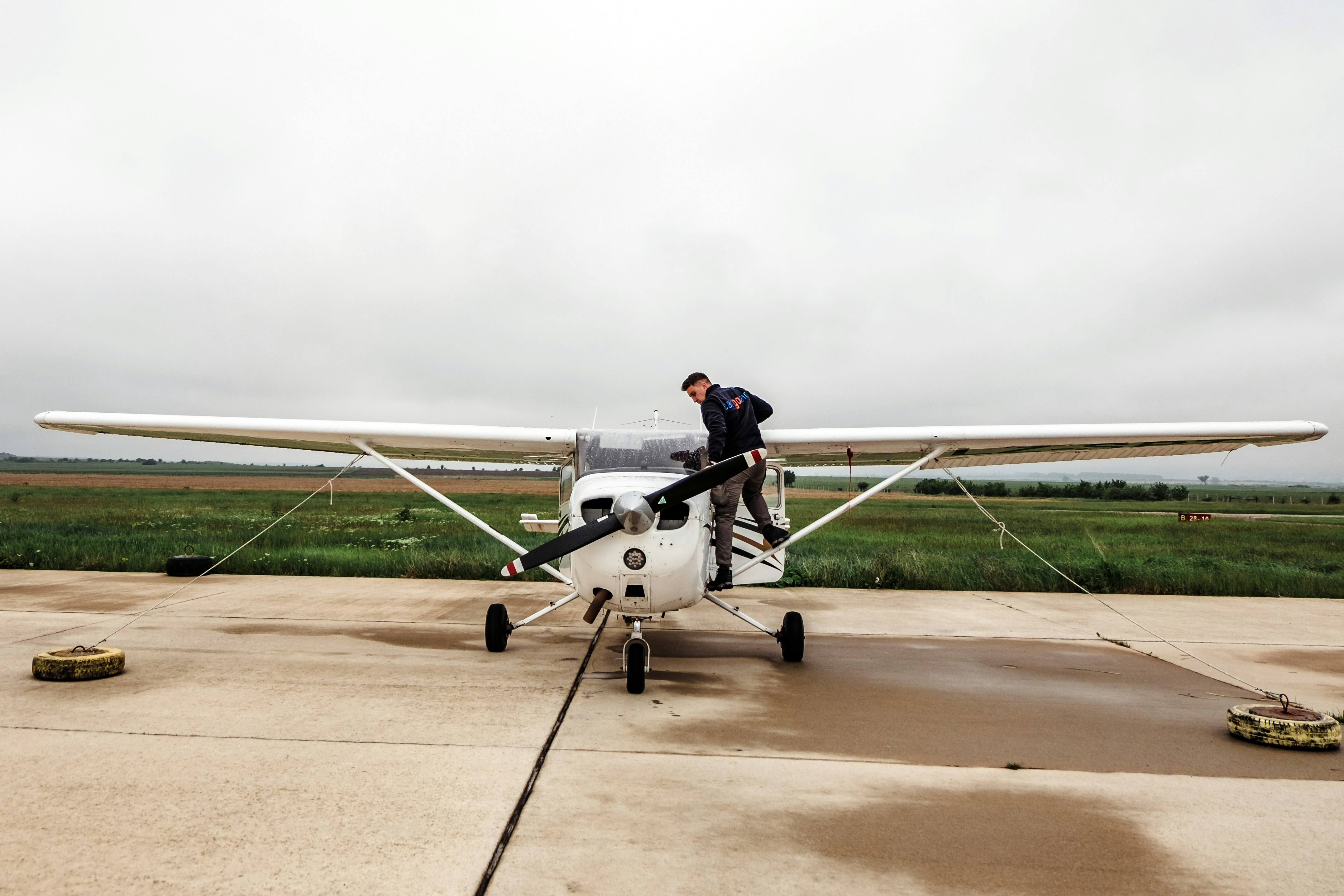
The logbook cannot show everything: It shows where training stopped six months ago. It does not show which flows are now slow, which radio habits faded, or how the pilot will respond when workload rises again.
A safe return starts with a current baseline, not an assumption that the last completed lesson is the right place to resume.
Return to flight training by verifying your current certificates, medical qualification, logbook records, endorsements, and legal currency; briefing a CFI on the length and nature of the break; refreshing aircraft systems, procedures, weather, airspace, and local changes; and flying a low-workload baseline lesson before resuming the previous syllabus point. Do not assume that confidence, logged time, or an old endorsement proves current proficiency.
Regulatory boundary: The requirements differ for a student pilot, a certificated pilot, a passenger-carrying operation, instrument flight, and other privileges. Verify the current regulations and records with a qualified instructor. A FlytWERX history does not replace a logbook, endorsement, flight review, or currency record.
Start with the legal and record check
Before scheduling a solo or acting as pilot in command, identify what applies to your situation.
Review:
- pilot or student-pilot certificate;
- medical certificate or BasicMed status, when applicable;
- government identification;
- pilot logbook and school training record;
- instructor endorsements and limitations;
- flight-review status for a certificated pilot;
- passenger-carrying and instrument recent experience, if relevant;
- aircraft-specific endorsements or checks;
- knowledge-test status and practical-test prerequisites if training was near completion;
- school enrollment, stage records, and approved curriculum requirements.
For student pilots, a solo endorsement under 14 CFR 61.87 is aircraft-specific and time-limited. A student may not continue solo merely because solo flight was authorized before the break. The instructor must verify the current endorsement, limitations, aircraft, conditions, and proficiency.
For certificated pilots, 14 CFR 61.56 and 61.57 may apply, along with other operation-specific requirements. Legal currency and proficiency remain separate questions.
Give the instructor an accurate history
Tell the CFI:
- when you last flew;
- what aircraft and phase of training you were in;
- whether you flew with another school or instructor during the gap;
- what tasks were strong and which were still developing;
- whether you had solo or cross-country privileges;
- any previous stage-check, knowledge-test, or practical-test status;
- why the break occurred, when relevant to planning;
- any changes in medical, medication, stress, sleep, confidence, finances, schedule, or goals that should be discussed with the appropriate person;
- what records, notes, or FlytWERX sessions are available.
Do not minimize the gap or exaggerate readiness. The purpose is to help the instructor choose a safe baseline, not to force the student backward or forward in the syllabus.
Expect the first lesson to be an assessment
A productive return lesson is usually designed to observe current capability, not to "make up for lost time."
The instructor may review:
- preflight planning and aircraft documents;
- cockpit flow and checklist use;
- taxi, radio, and runway procedures;
- normal takeoff, climb, turns, descent, and landing;
- slow flight, stalls, emergency procedures, or ground-reference maneuvers when appropriate;
- traffic scan and collision avoidance;
- go-around decisions;
- navigation and airspace awareness;
- workload and communication;
- self-assessment accuracy.
The exact content depends on the pilot, aircraft, break length, weather, and training goal.
Rebuild from foundations, not from embarrassment
A returning student may remember advanced concepts but have lost flow and control precision. Another may feel rusty in the cockpit while retaining sound judgment and knowledge.
Use the assessment to separate:
- knowledge recall: can the pilot explain the procedure and limitation?
- procedural recall: can the pilot complete the correct flow and checklist?
- motor skill: can the pilot control the airplane smoothly?
- recognition: does the pilot notice developing deviations?
- risk management: are decisions conservative and timely?
- workload: can the pilot maintain control while communicating and navigating?
- confidence calibration: does self-assessment match observed performance?
A temporary return to basic maneuvers is not a failure. It gives the instructor evidence for the fastest safe route forward.
Refresh what may have changed during the break
Even when the aircraft and airport look familiar, review:
- current POH/AFM and checklist revisions;
- maintenance or equipment changes;
- airport diagrams, runway status, and local procedures;
- airspace and chart changes;
- NOTAMs and temporary restrictions;
- school policies and standard operating procedures;
- avionics, apps, databases, and automation;
- ACS, knowledge-test, or training-program revisions;
- weather products and briefing tools;
- personal minimums and instructor limitations.
Do not rely on an old screenshot or memory when a current source is available.
A realistic return scenario
A student stopped flying for seven months after completing supervised solo traffic-pattern work. The student returns with the old logbook, school records, and several FlytWERX landing sessions.
The records show that before the break:
- pattern spacing was becoming consistent;
- approach speed was generally stable;
- crosswind correction and go-around timing still required coaching;
- the prior solo endorsement is no longer current.
The first return lesson does not begin with solo preparation. The instructor reviews the records, checks current knowledge and aircraft procedures, and flies a dual baseline in light wind. The student retains basic pattern geometry but becomes task-saturated during radio calls and delays a go-around on an unstable approach.
The next plan focuses on dual pattern work, radio workload, and a prebriefed go-around gate. The old FlytWERX sessions provide context, but the current performance controls the plan.
Build a three-stage return plan
Stage 1: Reestablish orientation
- aircraft systems and checklist;
- airport and airspace;
- normal control and procedures;
- recent regulatory and record review;
- personal readiness and goals.
Stage 2: Rebuild core proficiency
- takeoff, climb, turns, descent, pattern, landing, and go-around;
- emergency and abnormal procedures as appropriate;
- traffic, radio, and workload;
- maneuver-specific skills required by the syllabus or planned operation.
Stage 3: Resume progression
- reenter the syllabus at the point supported by current evidence;
- update endorsements and records as required;
- restore realistic scenario and cross-country work;
- set a sustainable training cadence;
- track recurring gaps and transfer to varied conditions.
The stages may occur in one lesson or several. The instructor decides based on performance.
How FlytWERX can support the baseline
FlytWERX can help the student and instructor compare pre-break and post-break maneuver attempts when the data and conditions are sufficiently comparable.
Useful questions include:
- Which skills were strong before the break?
- Which deviations were already recurring?
- What changed in the first return lesson?
- Did recognition or correction timing change?
- Are differences caused by current wind, aircraft, instructor prompting, or data source?
- Which skill should be rebuilt first?
When airspeed matters, FlytWERX can add estimated indicated airspeed, or eIAS, to the debrief. eIAS is a calculated training estimate based on GPS-derived speed, winds aloft, temperature, and the active wind correction; more representative local winds can be entered when available. The airplane's approved airspeed indication remains controlling in flight. See How FlytWERX calculates eIAS.
What FlytWERX cannot determine
The product cannot independently verify:
- current certificates, medical qualification, or identity;
- logbook accuracy;
- endorsement validity;
- flight-review or passenger-currency status;
- current school authorization;
- aircraft airworthiness;
- the suitability of weather or the planned flight;
- whether the pilot should resume solo or carry passengers;
- knowledge, scan, coordination, checklist discipline, and judgment not captured by the available data.
Use it as supporting evidence within the instructor-led return plan.
Is FlytWERX a fit for this workflow?
Which plan fits the way I train?
Use Sim-Only when the workflow stays in Microsoft Flight Simulator and the goal is structured simulator practice and review. Use In-Air + Sim when the decision depends on live-aircraft telemetry, real maneuver tracking, or in-air and post-flight debriefing. Verify the current plan inclusions and price on the FlytWERX pricing page before purchase.
What should the 14-day trial prove?
For this workflow, a useful trial should show that the returning pilot and CFI can establish a current baseline and a staged plan. Use several representative sessions, review the evidence with a CFI, and judge the trial by whether the next training action becomes clearer - not by app opens, novelty, or one improved score.
For the full buying details, use the pricing and plan comparison, flight-school implementation, data migration and record continuity, ROI measurement, and software comparison.
Put this into practice
Schedule a baseline lesson and list the procedures, conditions, and equipment that changed during the break. Review the result with the person who owns the training decision, then use the next comparable attempt to test whether the change worked.
Next step: Rebuild a Baseline With FlytWERX.
Important operating and training limits
This article is educational. It does not replace a qualified flight instructor, the current POH/AFM, required endorsements or records, approved school procedures, ATC instructions, or pilot-in-command judgment. FlytWERX supports performance review and debriefing; it is not a primary flight instrument and does not determine proficiency, readiness, authorization, or regulatory compliance by itself.
Do I have to start flight training over after a break?
No universal rule requires starting from the beginning. The instructor should assess current knowledge, skill, records, and legal status, then place the student appropriately.
How long a break is too long?
The sources cited here do not define one universal threshold. The effect depends on the pilot, prior proficiency, task, aircraft, training frequency, and conditions.
Can I solo on an old endorsement?
A student must comply with the current requirements of 14 CFR 61.87 and all instructor limitations. Verify the endorsement's aircraft, date, and conditions with an authorized instructor before any solo operation.
Should my first flight back be a checkride-style lesson?
Usually the first goal is a safe baseline, not a high-pressure final evaluation. The instructor should select content appropriate to the pilot and stage.
Can simulator practice help before returning?
It can support procedure, navigation, radio, and instrument-flow review. It does not automatically restore aircraft proficiency or provide regulatory credit unless the device and use meet the applicable requirements.
What if I feel confident but the instructor recommends more dual training?
Confidence is one input. Current observed performance, risk management, records, conditions, and instructor judgment should guide the plan.
- 14 CFR 61.51 - Pilot logbooks
- 14 CFR 61.56 - Flight review
- AC 61-98E - Currency Requirements and Guidance for the Flight Review and Instrument Proficiency Check
- 14 CFR 61.57 - Recent flight experience: pilot in command
- 14 CFR 61.87 - Solo requirements for student pilots
- 14 CFR 61.89 - General limitations for student pilots
- FAA Aviation Instructor's Handbook
- Aviation Instructor's Handbook, Chapter 3 - The Learning Process
- FAA Airman Certification Standards
- FlytWERX product page
- FlytWERX App Store listing
- FlytWERX eIAS methodology