
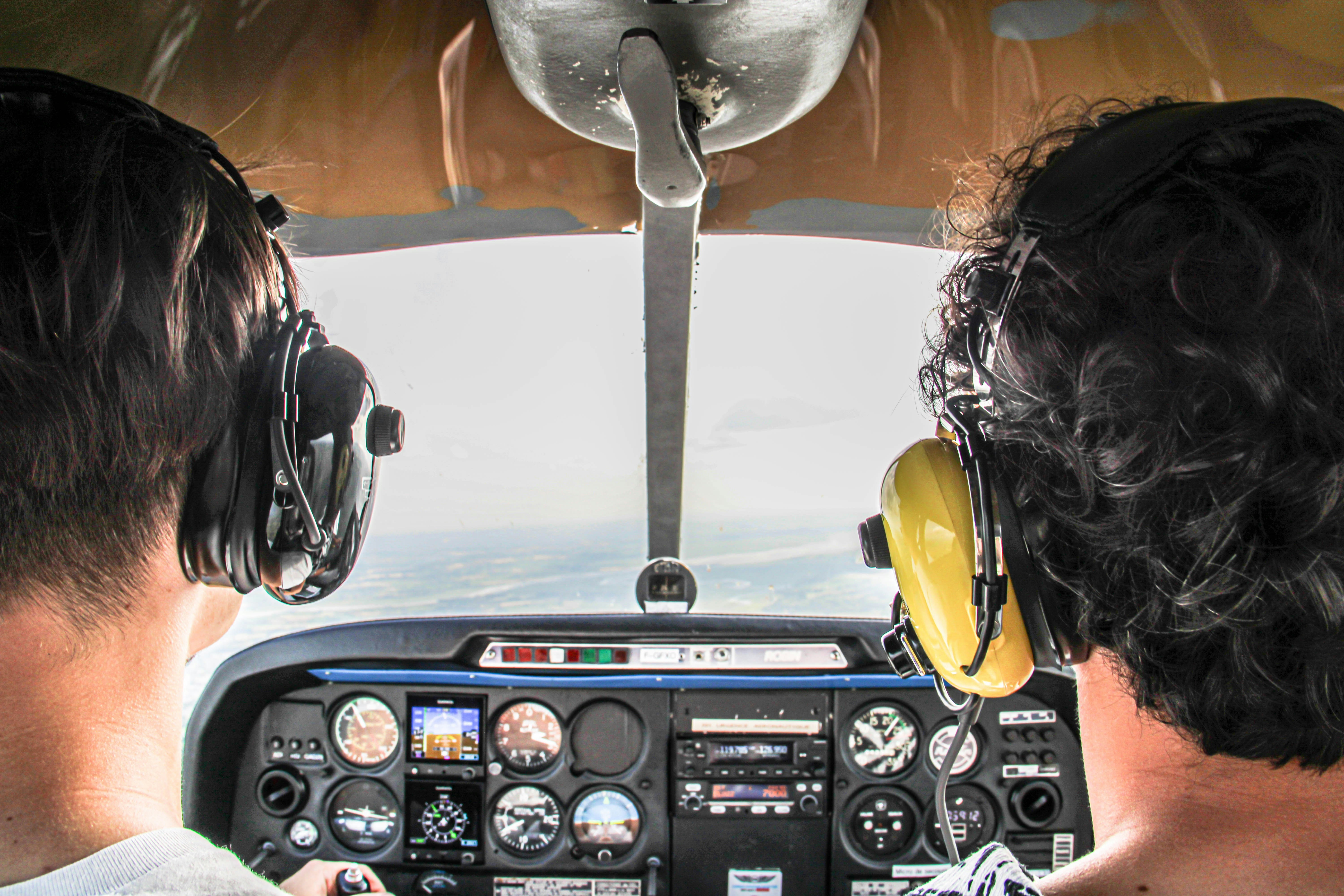
The temptation after a solo flight: The flight feels smooth until the replay shows the same heading drift that appeared during the previous dual lesson. The student is tempted to decide what caused it and change technique before speaking with the CFI.
Self-debriefing is useful when it produces better questions. It becomes risky when incomplete evidence turns into self-instruction.
A student self-debrief should reconstruct what happened, compare the performance with the correct standard, identify what remains uncertain, and prepare focused questions for the instructor. It should not become a self-issued grade, endorsement, diagnosis, or authorization to change technique without qualified guidance.
Instructor boundary: The student can observe and reflect. The instructor evaluates, teaches, interprets aircraft-specific performance, sets the next lesson standard, and provides any required endorsement or progression decision.
Use the FAA's four-part assessment sequence
The FAA Aviation Instructor's Handbook describes a learner-centered process built around four actions:
- Replay: reconstruct the experience in sequence;
- Reconstruct: consider what could, would, or should have been done differently;
- Reflect: connect the experience to the standard and the learner's understanding; and
- Redirect: use the lesson to change the next plan.
A self-debrief is useful when it prepares the student for that conversation. It becomes weak when the student jumps directly from a graph or memory to a confident explanation of cause.
Step 1: Replay the lesson in neutral language
Write the sequence before interpreting it.
Record:
- the lesson objective;
- aircraft, airport, runway, practice area, and conditions;
- maneuvers or procedures attempted;
- where the instructor demonstrated, prompted, or intervened;
- when the plan changed;
- the first event that needs review;
- what the student noticed in real time.
Use observations such as:
Altitude began decreasing as the right turn reached the planned bank.
Avoid conclusions such as:
I cannot fly steep turns.
The first statement can be tested. The second is a broad judgment based on one event.
Step 2: Identify the correct standard
Ask which reference applied:
- the current ACS task;
- the instructor's lesson objective;
- a school stage or syllabus standard;
- the POH/AFM procedure;
- a checklist or approved operating procedure;
- a regulatory limitation;
- an instructor-defined stop or go-around criterion.
A student may be practicing a maneuver long before the final practical-test standard is expected. Record both the destination standard and the lesson's current developmental goal.
Step 3: Separate recorded fact from interpretation
Create three categories.
What I know
Examples:
- the approach crossed the threshold above the planned path;
- the bank reached 51 degrees during the first steep turn;
- the rollout finished beyond the assigned heading;
- the go-around began after a late balloon;
- the instructor called for more right rudder during the power-on stall entry.
What I think may explain it
Examples:
- I turned base too close to the runway;
- I shifted attention inside while setting power;
- I began rollout when the target heading arrived instead of leading it;
- I changed flap before the climb was established;
- the local wind differed from the forecast input.
What I need the instructor to verify
Examples:
- Was the first problem the pattern spacing or the power reduction?
- Did the yaw begin before the pitch increase?
- Was the go-around decision late, or was the execution the larger concern?
- Was the aircraft indication or the eIAS estimate more representative during that segment?
This structure prevents a recorded result from becoming an unsupported diagnosis.
Step 4: Review the maneuver by phase
For a maneuver, divide the replay into:
- planning and setup;
- entry;
- established performance;
- recognition of deviation;
- correction;
- recovery or rollout;
- transition to the next phase.
Many students focus on the largest deviation. The more useful question is where the problem began.
A landing that touches long may have started with downwind spacing. An altitude loss during a steep turn may have started as bank increased. A poor go-around climb may have started with a delayed decision and excessive energy, not the flap change itself.
Step 5: Use data accurately
FlytWERX can support replay by showing available maneuver history and flight variables. Depending on the source, the record may include altitude, heading, course, position, ground track, groundspeed, vertical speed, pitch, bank, flight path, and estimated indicated airspeed.
Before interpreting the data, ask:
- What device or simulator produced each field?
- Was the device mounted and calibrated correctly?
- Are there gaps, smoothing, lag, or blended sources?
- Is altitude MSL, AGL, pressure altitude, or a derived value?
- Is direction heading, course, or GPS track?
- Is speed direct aircraft airspeed, simulator airspeed, GPS groundspeed, or FlytWERX eIAS?
- Were event markers automatic or manually entered?
A note on FlytWERX eIAS
When airspeed matters, FlytWERX can add estimated indicated airspeed, or eIAS, to the debrief. eIAS is a calculated training estimate based on GPS-derived speed, winds aloft, temperature, and the active wind correction; more representative local winds can be entered when available. The airplane's approved airspeed indication remains controlling in flight. See How FlytWERX calculates eIAS.
Step 6: Evaluate recognition and correction
Ask:
- When did the deviation first become visible?
- When did I notice it?
- Did the instructor have to prompt me?
- What correction did I make?
- Was the correction proportional?
- Did it solve the original problem?
- Did it create an overshoot or a new deviation?
- Did the same pattern repeat?
A student who recognizes an error early and corrects smoothly is demonstrating a different level of learning from one who remains unaware until the instructor intervenes, even when the maximum deviation is similar.
Step 7: Identify the highest-value question
Do not bring the instructor twenty disconnected observations. Choose the question with the greatest safety or learning value.
Useful priorities include:
- a risk-management decision;
- a repeated setup error;
- the earliest cause in a chain of deviations;
- a procedure or aircraft limitation that is unclear;
- a disagreement between memory and the recorded evidence;
- an eIAS or wind-input issue that affects the interpretation;
- a correction that consistently produces a secondary problem.
Step 8: Redirect the next lesson
Write one testable correction.
Example:
On the next normal approach, I will use the instructor's downwind spacing reference and confirm the runway picture before turning base. If the approach is not stable by the agreed gate, I will go around rather than trying to fix the touchdown on short final.
The instructor may revise that plan. The value of the self-debrief is that the student arrives with a factual starting point.
A realistic self-debrief scenario
A student remembers a power-on stall as "mostly good except for heading." The FlytWERX replay shows that heading began changing as pitch increased, before the full stall. The record does not include direct rudder input, slip/skid, actual power percentage, or the exact full-stall cue.
The student writes:
- Known: heading moved left during the entry and bank increased before recovery;
- Possible explanation: insufficient right rudder as power and angle of attack increased;
- Unknown: whether the airplane was uncoordinated and when the full stall occurred;
- Question for CFI: Did the yaw begin because I failed to increase rudder pressure, and what outside or aircraft cue should I use earlier?
That is a useful self-debrief. It does not claim that the graph proved the rudder error.
What a self-debrief cannot do
A student should not use self-analysis to:
- authorize a solo flight or maneuver;
- issue or extend an endorsement;
- decide that a required task is complete;
- replace an aircraft-specific procedure;
- diagnose a maintenance discrepancy;
- declare legal currency or practical-test readiness;
- infer stall warning, coordination, control input, checklist use, or visual scan from data that did not record it;
- publish another person's flight information without permission.
Is FlytWERX a fit for this workflow?
Which plan fits the way I train?
Use Sim-Only when the workflow stays in Microsoft Flight Simulator and the goal is structured simulator practice and review. Use In-Air + Sim when the decision depends on live-aircraft telemetry, real maneuver tracking, or in-air and post-flight debriefing. Verify the current plan inclusions and price on the FlytWERX pricing page before purchase.
What should the 14-day trial prove?
For this workflow, a useful trial should show that self-review creates better questions for the CFI instead of unsupported conclusions. Use several representative sessions, review the evidence with a CFI, and judge the trial by whether the next training action becomes clearer - not by app opens, novelty, or one improved score.
For the full buying details, use the pricing and plan comparison, flight-school implementation, data migration and record continuity, ROI measurement, and software comparison.
Put this into practice
Replay one event, separate what is known from what is uncertain, and bring one question to the CFI. Review the result with the person who owns the training decision, then use the next comparable attempt to test whether the change worked.
Next step: Bring Better Questions to Your CFI With FlytWERX.
Important operating and training limits
This article is educational. It does not replace a qualified flight instructor, the current POH/AFM, required endorsements or records, approved school procedures, ATC instructions, or pilot-in-command judgment. FlytWERX supports performance review and debriefing; it is not a primary flight instrument and does not determine proficiency, readiness, authorization, or regulatory compliance by itself.
Frequently asked questions
Should I debrief before talking with my instructor?
Yes, when practical. Record your memory and questions, then compare them with the instructor's observations and the available evidence.
What if my memory and the data disagree?
Verify the source, labels, mounting, timing, and data quality. Treat the disagreement as a question. Neither memory nor an isolated sensor trace is automatically correct in every respect.
Can I grade myself against the ACS?
You can compare the event with the applicable task, but the instructor must interpret the complete performance and set the training or endorsement decision.
How many corrections should I choose?
Usually one primary correction is more actionable than a long list. The instructor may add supporting items based on safety and lesson objectives.
Can FlytWERX tell me why a deviation happened?
It can show patterns in recorded variables and support questions. A causal conclusion requires adequate data, aircraft context, student input, and instructor judgment.
Is a lower score always a worse attempt?
No. A student may demonstrate better recognition, correction, judgment, or procedure even if one recorded variable produces a lower summary score.
- FAA Aviation Instructor's Handbook
- Aviation Instructor's Handbook, Chapter 6 - Assessment
- FAA Airman Certification Standards
- Private Pilot for Airplane Category ACS, FAA-S-ACS-6C
- FlytWERX product page
- FlytWERX App Store listing
- FlytWERX eIAS methodology