
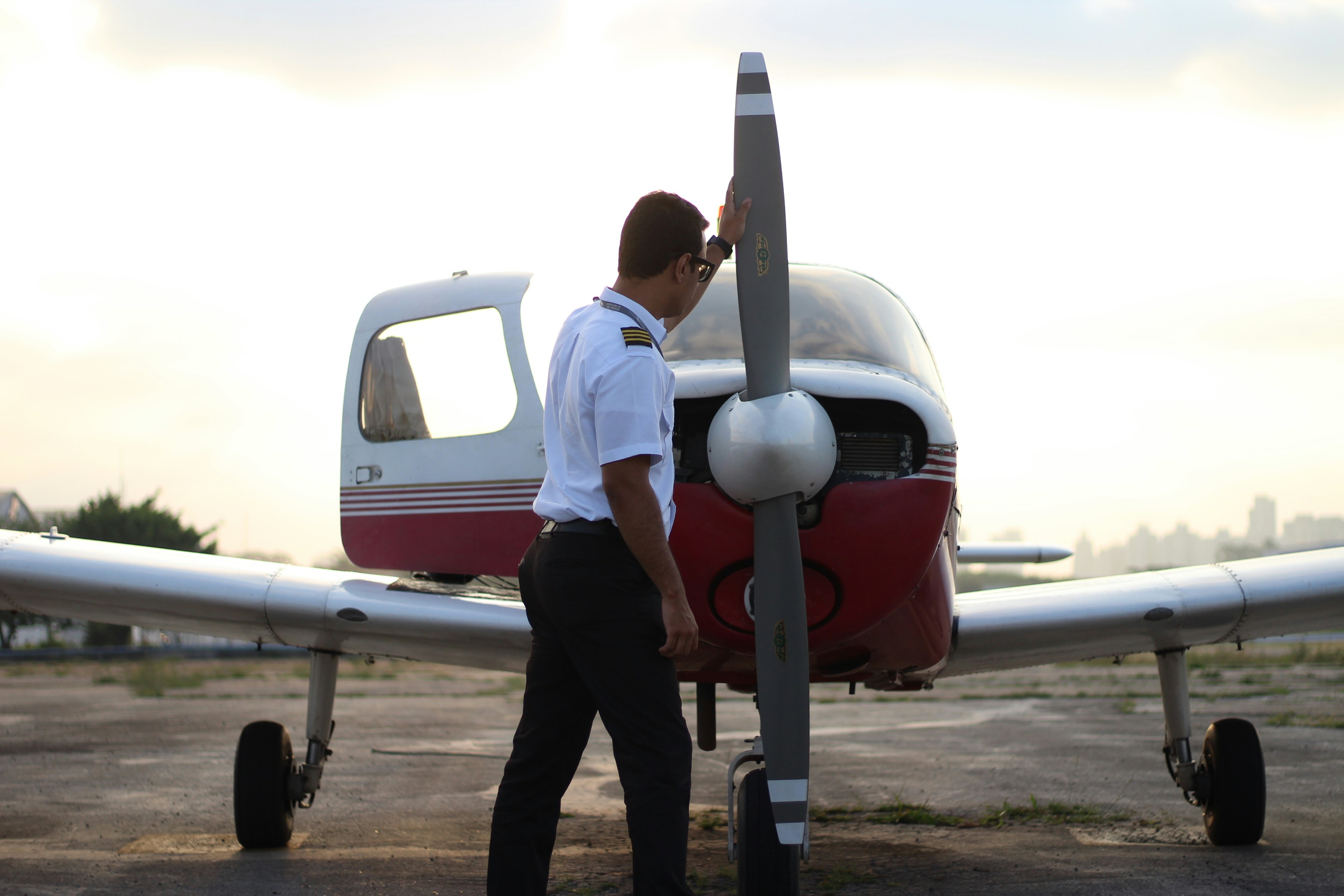
Climbing and descending turns combine three control problems at once:changing altitude, changing direction, and maintaining an appropriate airspeedand energy state. Pilots use that combination during departures, trafficpatterns, arrivals, go-arounds, terrain or airspace avoidance, and many ATCinstructions. The maneuver exposes problems that may remain hidden when climbs,descents, and turns are practiced separately.
FAA-contextnote: Climbing and descending turns are required elements of pre-solotraining under 14 CFR 61.87. In the current private-pilot ACS, the BasicInstrument Maneuvers for constant-airspeed climbs and descents specificallyinclude straight flight and turns. "Climbing and Descending Turns" isnot a separate ACS task with one universal standalone tolerance. Use theapplicable task, lesson objective, POH/AFM, and instructor standards ratherthan inventing a new checkride number.
Why pilots really learn thismaneuver
Airplanes rarely change altitude only while flying straight ahead. Apilot may need to turn while climbing to follow a departure path, remain clearof airspace, avoid traffic, or join the appropriate route. During arrival, thepilot may descend while turning toward a traffic-pattern leg, an assignedheading, or a navigation course.
The skill matters because bank changes the lift requirement at the sametime that pitch and power are being used to control altitude and airspeed. Thepilot must also keep attention outside for traffic and inside for aircraftperformance.
Climbing and descending turns teach the pilot to:
· coordinate bank, pitch, power, and trim;
· prevent airspeed from decaying in a climbing turn;
· prevent excessive acceleration or descent rate in adescending turn;
· maintain situational awareness while severalparameters change;
· use shallow or appropriate bank when performanceand visibility demand it;
· level the wings, capture altitude, and stabilizewithout a series of corrections;
· understand that the airplane's available climbperformance may be reduced when bank and other demands increase;
· keep a traffic-pattern turn from becoming alow-altitude overshoot or energy problem.
A realistic scenario
After takeoff, a pilot begins a climbing turn toward the crosswind leg.The pilot adds more bank to tighten the turn while continuing to pitch for thesame climb attitude used with the wings level. Airspeed begins to decay, theclimb rate changes, and the pilot's traffic scan narrows.
The real lesson is not "never turn while climbing." Pilotsmust do it routinely. The lesson is to choose an appropriate bank, protectairspeed, understand performance, and avoid forcing the airplane into alow-altitude, low-energy condition.
On arrival, the opposite problem can occur. A pilot descends towardpattern altitude while turning toward downwind, allows the nose to fall, andarrives fast. That extra energy has to be removed later, often while the pilotis also configuring and looking for traffic. A stable descending turn canprevent the workload from accumulating.
Relevant FAA requirements andstandards
Source / Relevantrequirement or standard
• 14 CFR 61.87:Before solo in a single-engine airplane, a student must receive and logtraining in climbs and climbing turns, and in descents with and without turnsusing high- and low-drag configurations. The student must demonstratesatisfactory proficiency and safety as judged by an authorized instructor.
• Private PilotACS, Constant Airspeed Climbs: Transition to the climb profile on anassigned heading, climb at constant airspeed to specific altitudes in straightflight and turns, then level and maintain altitude within +/-200 feet, headingwithin +/-20 degrees, and airspeed within +/-10 knots.
• Private PilotACS, Constant Airspeed Descents: Transition to the descent profile on anassigned heading, descend at constant airspeed to specific altitudes instraight flight and turns, then level and maintain altitude within +/-200 feet,heading within +/-20 degrees, and airspeed within +/-10 knots.
• POH/AFM andinstructor lesson plan: Supply aircraft-specific speeds, configurations,power settings, limitations, and acceptable bank or performance targets.
The ACS values above apply to the named basic-instrument tasks. A visualclimbing or descending turn may be taught with different lesson targets. Theinstructor should state the standard before grading the attempt.
What changes when the airplanebanks
In level flight, lift balances weight. In a bank, part of the lift isdirected horizontally to turn the airplane. If the pilot wants to maintain thesame vertical performance, the total lift requirement changes. In a climb, theengine and wing are already supporting an energy increase; adding bank canreduce the climb performance available under the same conditions. In a descent,lowering the nose and reducing power can allow airspeed to build unless thepilot manages the energy deliberately.
This is why a good debrief looks at relationships instead of isolatedvalues:
· Did bank increase before eIAS decayed?
· Did pitch remain unchanged even though theairplane's performance changed?
· Did vertical speed increase because the nosedropped during the turn?
· Did the pilot reduce bank after recognizing reducedclimb performance?
· Did the level-off and rollout occur in a logicalsequence?
The correct control inputs depend on the airplane, configuration,target, and operating conditions. The point is not to apply one memorizedformula to every turn.
Key deviations to examine
1. Airspeed decayed in theclimbing turn
Review whether bank increased, pitch remained excessive, available powerwas limited, or the correction came late. Density altitude, weight, downdrafts,and aircraft performance also matter.
2. The turn became steeper as theclimb performance weakened
A pilot may try to reach a heading more quickly without recognizing theenergy cost. At low altitude, this can reduce margins and increase workload.
3. Altitude or vertical speedchanged unexpectedly during a heading correction
If the pilot fixes heading with bank alone while ignoring pitch andenergy, the vertical profile can deteriorate. Identify which variable movedfirst.
4. The descending turnaccelerated
A nose-low attitude, reduced drag, excess power, or delayedconfiguration can produce increasing airspeed. Review eIAS, pitch, verticalspeed, bank, and configuration context.
5. The pilot rolled out but didnot capture the altitude
Direction and altitude may need to stabilize at different moments. Arushed simultaneous correction can create heading overshoot, altitudeovershoot, and speed change. The instructor should define the intendedsequence.
6. The pilot became fixatedinside
Climbing and descending turns often occur in traffic-rich phases offlight. Telemetry can show aircraft performance, but it cannot prove that thepilot maintained an effective visual scan.
7. A normal training profile wasapplied in abnormal conditions
Wind, turbulence, density altitude, aircraft weight, icing, or degradedengine performance can change the result. The pilot must interpret performancerather than force a memorized number.
How FlytWERX supports the review
FlytWERX lists Climbing and Descending Turns as a supported maneuver andcan organize available simulator or live-flight data around the combinedprofile. Depending on the source and setup, the debrief can include:
· altitude and vertical-speed trends;
· pitch and bank;
· heading, course, and ground track;
· GPS speed and estimated indicated airspeed;
· turn entry, steady segment, rollout, and level-offtiming;
· maneuver scoring, deviation detail, instructorgrading, shared targets, notes, and history;
· replay and 3D flight-path context.
The most useful view is often a synchronized timeline. It can reveal,for example, that bank increased first, eIAS began decaying several secondslater, and the pilot responded with a pitch change only after verticalperformance had already weakened. That is more actionable than saying themaneuver was simply "unstable."
FlytWERX estimated indicatedairspeed
For supported live-flight reviews, FlytWERX calculates estimatedindicated airspeed, or eIAS, from GPS speed, current winds aloft, andtemperature. A pilot or instructor can update the wind correction using morerepresentative winds for the training area.
FlytWERX instructors have generally observed eIAS averaging about 1 to 3knots from the airplane's indicated airspeed when the wind correction iscurrent. This is a first-party field observation, not an independentcertification or guaranteed specification. Localized wind, changing altitude orposition, stale wind inputs, maneuvering, sensor behavior, sampling, andaircraft-instrument error can increase the difference. The airplane's approvedairspeed indication remains controlling.
In climbing and descending turns, eIAS can help identify whether speedchanged as bank, pitch, and vertical performance changed. It should beinterpreted as a debrief estimate, especially when the airplane is maneuveringthrough wind gradients.
A practical FlytWERX debrief
1. Define the profile. Starting altitude,target altitude, heading change, intended airspeed, bank, configuration, andpower context.
2. Mark the entry. Did pitch, power, and bankchange in the intended order?
3. Find the first drift. Airspeed, bank,heading, vertical speed, or altitude trend.
4. Trace the relationship. Determine whatchanged immediately before the drift.
5. Review the steady portion. Was thecombined turn and vertical profile stable enough to leave attention for trafficand other tasks?
6. Review rollout and level-off. Did onecorrection create a second deviation?
7. Add operational context. Traffic, terrain,airspace, turbulence, density altitude, and aircraft loading matter.
8. Choose one correction. Examples includereducing bank in the climb, setting the descent profile before turning, orrestoring the airspeed scan earlier.
9. Compare another attempt. Use similartargets and conditions when possible and compare the sequence, not only thescore.
What the data cannot establish byitself
FlytWERX cannot independently determine:
· whether the airplane was aerodynamicallycoordinated;
· exact power, flap, or trim settings unless thosedata are available;
· the pilot's traffic scan and collision-avoidanceperformance;
· whether the chosen path met local pattern, ATC,terrain, or obstacle requirements;
· aircraft performance margins, weight and balance,or density-altitude adequacy without the required inputs and calculations;
· exact cockpit IAS from eIAS alone;
· whether turbulence, wind shear, or a downdraftcaused a change;
· whether the pilot used the correctaircraft-specific procedure.
The instructor combines the data with the aircraft, conditions,observation, and lesson objective.
Frequently asked questions
Are climbing and descending turnsrequired before solo?
Yes. For a student training in a single-engine airplane, 14 CFR 61.87requires training in climbs and climbing turns and in descents with and withoutturns using high- and low-drag configurations. The authorized instructor mustjudge the student proficient and safe before solo authorization.
Is there one ACS tolerance for"climbing and descending turns"?
No standalone task by that exact name appears in the currentprivate-pilot ACS. The Basic Instrument Maneuvers for constant-airspeed climbsand descents explicitly include turns and provide the tolerances for thosetasks. Visual training targets should be stated by the instructor and tied tothe lesson, POH/AFM, and applicable standard.
Why can airspeed fall in aclimbing turn?
Bank changes the lift requirement while the airplane is already usingenergy to climb. Excessive pitch, increased bank, limited power, weight,density altitude, turbulence, and other factors can reduce airspeed or climbperformance. The debrief must examine the complete context.
Why can a descending turn becometoo fast?
Altitude can be converted into airspeed when the nose is lowered. Ifpower, pitch, drag, and configuration are not coordinated, the airplane mayaccelerate and arrive at the next phase with excess energy.
Can FlytWERX show whether bankcaused the speed change?
It can show the timing relationship among bank, pitch, vertical speed,altitude, and eIAS. That evidence can support an instructor's diagnosis, but itdoes not prove causation by itself because wind, turbulence, power,configuration, and aircraft performance also matter.
Should a pilot always use thesame bank angle in a climbing turn?
No universal bank angle is appropriate for every airplane and situation.Use the POH/AFM, instructor guidance, performance, altitude, traffic, andoperational requirements.
Editorial and safety boundary
A named CFI or CFII and the FlytWERX product owner must review thisarticle before publication. It does not prescribe a universal bank, pitch,power, speed, traffic-pattern technique, or obstacle-clearance procedure. ThePOH/AFM, regulations, ATC instructions, instructor guidance, weather, aircraftperformance, and pilot-in-command judgment govern the flight.
· Electronic Code of Federal Regulations, 14 CFR61.87: https://www.ecfr.gov/current/title-14/chapter-I/subchapter-D/part-61/subpart-C/section-61.87
· FAA, Airman Certification Standards: https://www.faa.gov/training_testing/testing/acs
· FAA, Private Pilot for Airplane Category ACS,FAA-S-ACS-6C, Area VIII, Tasks B and C: https://www.faa.gov/training_testing/testing/acs/private_airplane_acs_6.pdf
· FAA, Airplane Flying Handbook, Chapter 3, BasicFlight Maneuvers: https://www.faa.gov/sites/faa.gov/files/regulations_policies/handbooks_manuals/aviation/airplane_handbook/04_afh_ch3.pdf
· FAA, Airplane Flying Handbook, Chapter 4, EnergyManagement: https://www.faa.gov/sites/faa.gov/files/regulations_policies/handbooks_manuals/aviation/airplane_handbook/05_afh_ch4.pdf
· FlytWERX product page: https://www.flytwerx.com/
· FlytWERX App Store listing: https://apps.apple.com/us/app/flytwerx/id6758866523
· FlytWERX eIAS methodology and 1-to-3-knotinstructor field observation: product-owner statement supplied July 2026;publish a public methodology note before external release.