
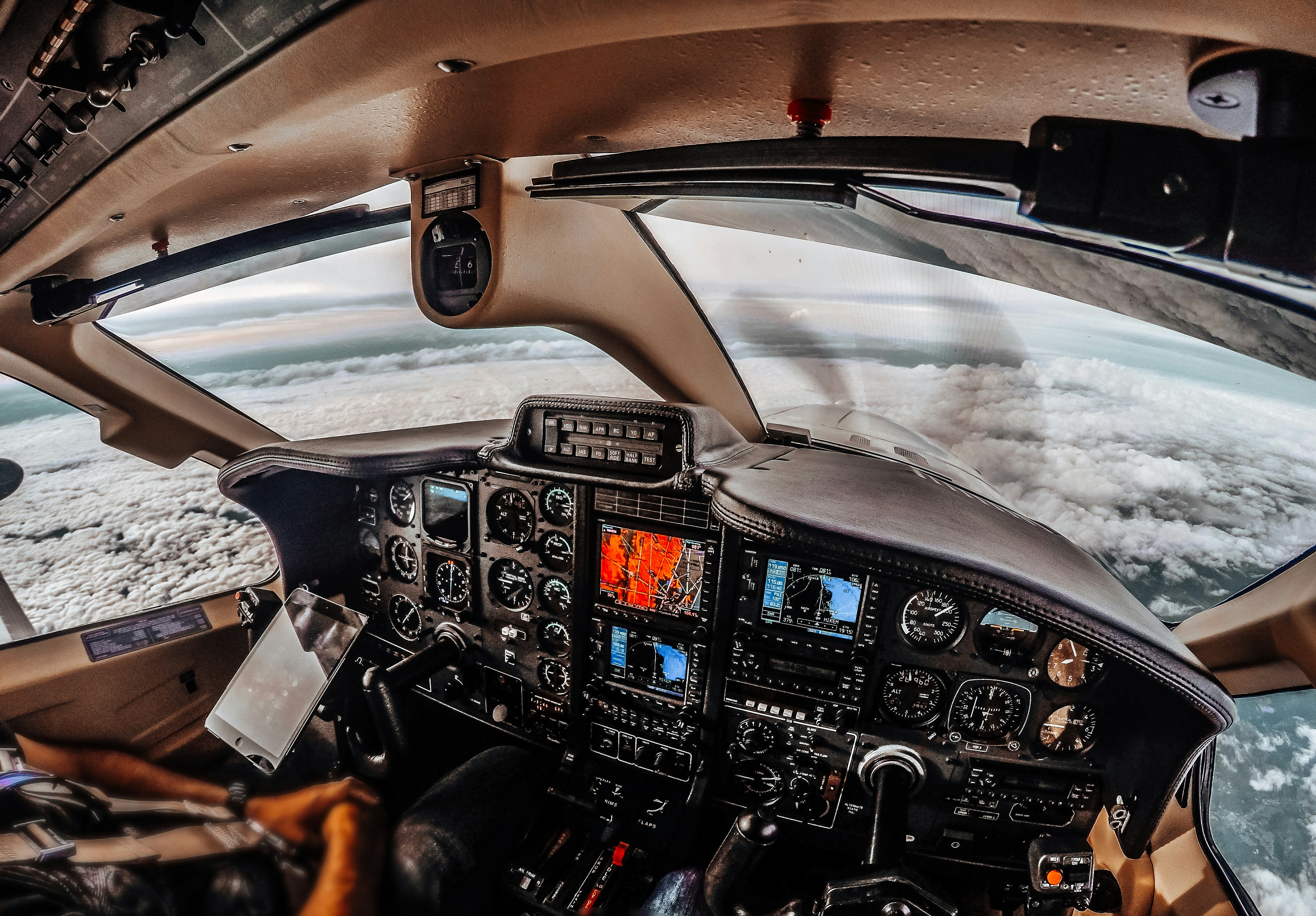
The gap usually appears here: The student has the hours, the knowledge test, and several maneuvers that look good on paper. Then the CFI asks, "Can you recognize an unstable approach and go around without prompting?" The progress record does not answer.
Checkride preparation becomes clearer when readiness is separated into records, knowledge, risk management, and repeatable skill.
Track private-pilot progress in four separate evidence streams: eligibility and records, aeronautical knowledge, risk management, and flight skill. The FAA practical test is not based on hours or maneuver scores alone. A student must meet the applicable regulatory prerequisites, receive the required instructor endorsements, and demonstrate the knowledge, judgment, procedures, and aircraft control described in the current Airman Certification Standards.
Readiness boundary: FlytWERX can help organize maneuver history, recorded flight variables, repeated attempts, and student-instructor review. It does not issue endorsements, verify every legal prerequisite, evaluate every ACS element, or determine practical-test readiness by itself.
Start with the current FAA standard
The Private Pilot for Airplane Category Airman Certification Standards, FAA-S-ACS-6C, organizes the practical test by areas of operation and tasks. Each task integrates three dimensions:
- Knowledge: what the applicant understands and can explain;
- Risk management: how the applicant identifies, assesses, and controls hazards; and
- Skill: what the applicant can perform in the airplane or approved training environment.
A progress tracker that records only altitude, heading, airspeed, bank, or touchdown accuracy leaves out much of what the practical test evaluates. The student must also be able to plan, make decisions, use checklists and procedures, communicate, manage workload, and discontinue an unsafe or unstable maneuver.
Separate five different questions
A student can be strong in one category and incomplete in another. Review each category independently.
1. Are the eligibility requirements met?
Applicable requirements can include age, language ability, certificates, aeronautical knowledge, flight training, aeronautical experience, knowledge-test status, application records, and instructor endorsements. The exact requirements depend on the certificate, rating, category, class, and training program.
Use the current versions of 14 CFR 61.103, 61.105, 61.107, 61.109, and 61.39 with the instructor and school. Do not rely on an old checklist or assume that an app has verified the record.
2. Has each ACS task been introduced and trained?
For each area of operation, use a simple status vocabulary:
- not introduced;
- introduced with demonstration;
- practiced with substantial instructor support;
- developing with occasional support;
- performed independently in suitable training conditions;
- repeatable across comparable attempts;
- reviewed again after a gap or major condition change;
- instructor-verified for the current stage of training.
These labels are more useful than a single percentage because they preserve where the student is in the learning process.
3. Is the performance repeatable?
One good attempt can show potential. It does not necessarily show reliable proficiency. Look for repeated performance under comparable conditions and ask:
- Did the student set up the maneuver correctly without prompting?
- Was the applicable procedure used?
- Were deviations recognized early?
- Were corrections timely and proportional?
- Did the correction solve the original problem without creating another one?
- Did the performance remain acceptable when workload, wind, traffic, or task sequence changed?
- Could the student explain what happened and what should change next?
The instructor decides what level of repeatability is appropriate for the lesson, stage check, practical-test preparation, and actual operating environment.
4. Is the student managing risk, not just tolerances?
A technically accurate maneuver may still be unsatisfactory if the area was not clear, the altitude was inappropriate, the student ignored traffic, the aircraft was configured incorrectly, the checklist was not used, or the student continued after conditions made the maneuver unsafe.
Track decision points such as:
- runway and practice-area selection;
- weather and wind interpretation;
- traffic and collision avoidance;
- stabilized-approach gates;
- go-around decisions;
- fuel, alternates, and performance planning;
- aircraft limitations and abnormal indications;
- workload, distraction, fatigue, and task saturation.
5. Has an authorized instructor verified readiness?
The regulations require instructor endorsements for the practical test. The instructor must evaluate the whole applicant, not merely a dashboard. That judgment includes knowledge, risk management, procedures, aircraft control, consistency, recent performance, records, and the ability to operate safely without coaching.
Hours are prerequisites, not proof of readiness
For a private pilot airplane single-engine rating under Part 61, 14 CFR 61.109 specifies minimum aeronautical experience. An approved Part 141 course follows its approved curriculum and applicable regulatory requirements. Neither pathway converts the minimum number of hours into an automatic readiness decision.
A student may exceed the minimum hours while still developing one or more areas. Another may perform many maneuver elements well but still lack required experience, endorsements, knowledge-test status, or consistent judgment. Track the regulatory record and the performance record separately.
Build a task-level progress record
For every important task, record the following information in plain language.
Objective
What was the lesson or maneuver intended to demonstrate? Use the instructor's lesson objective and the correct ACS task rather than a generic label.
Standard
What standard applied that day?
- current ACS task;
- school stage standard;
- POH/AFM procedure;
- instructor developmental target;
- approved curriculum requirement;
- aircraft or operating limitation.
Conditions
Record the context that materially affected the result:
- aircraft and configuration;
- runway or practice area;
- wind, gusts, turbulence, ceiling, visibility, and density altitude;
- traffic and ATC workload;
- dual, solo, simulator, or ground session;
- instructor intervention;
- equipment or data-source limitations.
Evidence
Use instructor observation, student notes, required records, and recorded data. Label each field accurately. Do not treat GPS ground track as heading, groundspeed as cockpit indicated airspeed, or a derived value as a direct aircraft measurement.
Recognition and correction
Record when the first meaningful deviation appeared, whether the student recognized it without prompting, what correction followed, and whether the correction was effective.
Repeatability
Compare several attempts when conditions are sufficiently similar. A trend is more informative than the highest or lowest score from one flight.
Next action
Choose one correction, study item, scenario, or procedure for the next lesson. The action should name the cue, the response, and the expected result.
A realistic progress-tracking scenario
A student has completed the minimum required aeronautical experience and has performed steep turns within the numeric tolerances on several flights. The student's progress record still shows two concerns:
- the area-clearing procedure is inconsistent; and
- altitude control deteriorates when the student answers a question during the maneuver.
A score-only system may show the steep turns as complete. An ACS-based record shows that risk management, division of attention, and repeatability still need work.
The instructor plans the next lesson around a normal pre-maneuver flow, a clear outside scan, and one controlled distraction after the bank is established. The objective is not merely another acceptable trace. It is a repeatable maneuver with the correct setup, traffic awareness, and workload management.
Use FlytWERX as an evidence layer
FlytWERX can support the skill portion of the record by organizing maneuver attempts, flight paths, progress history, and student-instructor review. Depending on the source and current product configuration, the review may include altitude, heading, course, position, ground track, groundspeed, vertical speed, pitch, bank, and estimated indicated airspeed.
When airspeed matters, FlytWERX can add estimated indicated airspeed, or eIAS, to the debrief. eIAS is a calculated training estimate based on GPS-derived speed, winds aloft, temperature, and the active wind correction; more representative local winds can be entered when available. The airplane's approved airspeed indication remains controlling in flight. See How FlytWERX calculates eIAS.
What FlytWERX cannot verify by itself
The available record generally cannot establish every item required for a practical test, including:
- complete eligibility and application records;
- the validity of every endorsement;
- knowledge-test preparation and oral knowledge;
- checklist discipline when not separately recorded;
- visual scan and traffic awareness;
- rudder coordination without a suitable source;
- radio communication quality;
- aircraft documents, maintenance status, and airworthiness decisions;
- weather interpretation and preflight planning quality;
- the reason behind every decision;
- readiness for an instructor endorsement.
Use the product to make the instructor-student discussion more factual, not to replace the discussion.
A weekly checkride-progress review
Once each week, the student and instructor can review these questions:
- Which ACS tasks were trained this week?
- Which tasks improved under comparable conditions?
- Which deviations repeated?
- Which tasks were acceptable only with prompting?
- Which knowledge or risk-management items need ground review?
- Which required experience or endorsements remain incomplete?
- Which tasks have not been revisited recently?
- What one objective should lead the next lesson?
- What evidence should be captured next time?
- Does the instructor agree with the student's self-assessment?
The purpose is not to create pressure around a predicted checkride date. It is to keep training decisions connected to the actual standard and the student's current evidence.
Is FlytWERX a fit for this workflow?
Which plan fits the way I train?
Use Sim-Only when the workflow stays in Microsoft Flight Simulator and the goal is structured simulator practice and review. Use In-Air + Sim when the decision depends on live-aircraft telemetry, real maneuver tracking, or in-air and post-flight debriefing. Verify the current plan inclusions and price on the FlytWERX pricing page before purchase.
What should the 14-day trial prove?
For this workflow, a useful trial should show that task coverage, instructor assistance, risk management, and repeatability become clearer without predicting readiness. Use several representative sessions, review the evidence with a CFI, and judge the trial by whether the next training action becomes clearer - not by app opens, novelty, or one improved score.
For the full buying details, use the pricing and plan comparison, flight-school implementation, data migration and record continuity, ROI measurement, and software comparison.
Put this into practice
Choose one ACS task and review records, knowledge, risk, independence, and repeatability separately. Review the result with the person who owns the training decision, then use the next comparable attempt to test whether the change worked.
Next step: Build Your Progress Record With FlytWERX.
Important operating and training limits
This article is educational. It does not replace a qualified flight instructor, the current POH/AFM, required endorsements or records, approved school procedures, ATC instructions, or pilot-in-command judgment. FlytWERX supports performance review and debriefing; it is not a primary flight instrument and does not determine proficiency, readiness, authorization, or regulatory compliance by itself.
Frequently asked questions
Does reaching 40 hours mean a student is ready for the private-pilot checkride?
No. The applicable aeronautical-experience requirement is a prerequisite, not an automatic proficiency determination. The student must also satisfy the other regulatory requirements and receive the required instructor endorsements.
Should every early lesson be graded to final checkride tolerances?
Not necessarily. The ACS provides the practical-test standard, while the instructor sets developmentally appropriate lesson objectives. The student should know the destination standard without treating an early learning attempt as a final evaluation.
Can a maneuver score prove checkride readiness?
No. A score may summarize selected recorded variables. It does not automatically evaluate knowledge, risk management, procedures, coordination, communication, visual scan, judgment, endorsements, and the full ACS task.
How often should a progress record be updated?
Update it after each meaningful lesson and review it periodically with the instructor. The exact cadence depends on the school and training program.
What does "consistent" mean?
The FAA sources do not prescribe one universal number of repetitions. In practice, the instructor looks for repeatable setup, control, recognition, correction, judgment, and performance across suitable conditions.
Can FlytWERX replace a school syllabus or required training record?
No. Use the school's approved records, logbooks, endorsements, and curriculum requirements. FlytWERX can provide an additional performance and debrief layer.
- FAA Airman Certification Standards
- FAA Recreational Pilot and Private Pilot Practical Tests
- Private Pilot for Airplane Category ACS, FAA-S-ACS-6C
- 14 CFR 61.39 - Prerequisites for practical tests
- 14 CFR 61.103 - Eligibility requirements for a private pilot certificate
- 14 CFR 61.105 - Aeronautical knowledge
- 14 CFR 61.107 - Flight proficiency
- 14 CFR 61.109 - Aeronautical experience
- FAA Aviation Instructor's Handbook
- FlytWERX product page
- FlytWERX App Store listing
- FlytWERX eIAS methodology