
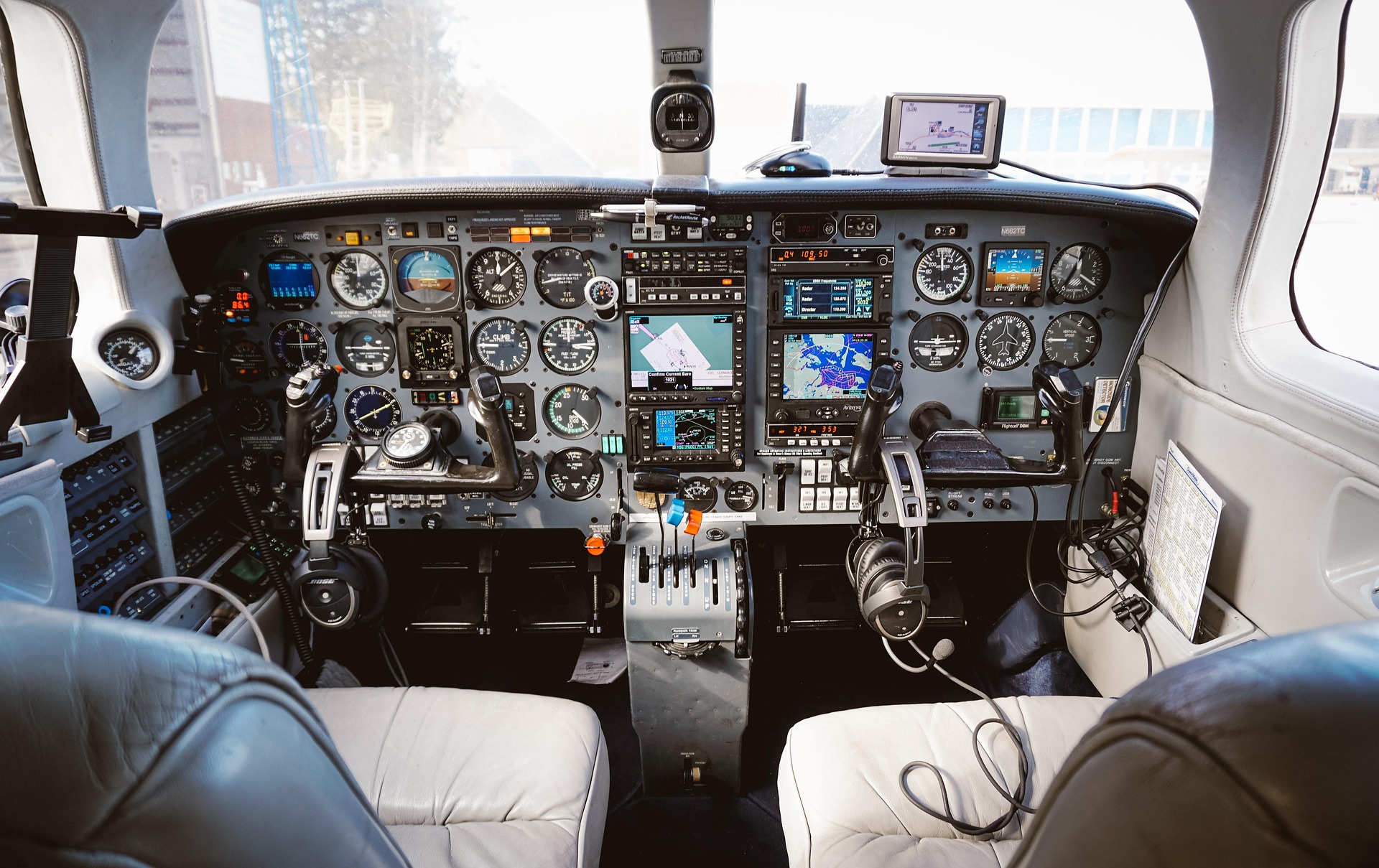
In a training debrief, a stable maneuver is one in which the airplaneremains predictably controlled around the intended targets, trends arerecognized before they become large deviations, and corrections become smallerrather than creating repeated oscillations. Stability does not mean perfectlyflat data lines, and it does not mean every maneuver should look the same. Thecorrect definition depends on the phase of flight and the maneuver objective.
Terminologynote: This article uses "stable" in the practical training andperformance sense. It is not a complete discussion of formal aerodynamic staticor dynamic stability. Aircraft aerodynamic characteristics are addressed in FAAhandbooks and the POH/AFM.
Stability is contextual
A stable steep turn does not look like a stable climb. A stable approachdoes not use the same altitude profile as straight-and-level flight. Therelevant question is whether the variables are behaving in a controlled way forthe intended maneuver.
Examples:
· Straight-and-level: altitude, heading, airspeed,pitch, and bank stay near the selected condition with small corrections.
· Constant-airspeed climb: eIAS remains near targetwhile altitude rises and vertical speed remains reasonably consistent for theconditions.
· Turn to a heading: bank and turn rate arecontrolled, altitude and airspeed remain near target, and rollout produces astable capture.
· Steep turn: bank is established and held, altitudeand airspeed are managed, and rollout does not create a second maneuver.
· Approach: flight path, speed, alignment,configuration, and descent remain within the operator's or instructor's statedcriteria, with a go-around if the approach no longer meets them.
· Slow flight: the airplane is controlled at theintended low-speed condition without unrecognized trend toward a stall oruncontrolled deviation.
The trace can move and still be stable. A climb is supposed to changealtitude. A turn is supposed to change heading. Stability describes the qualityand predictability of that change.
Why pilots really need stablecontrol
Stable performance reduces workload and preserves options. When theairplane is trimmed, the trend is understood, and corrections are small, thepilot has more attention for traffic, navigation, weather, radio calls,checklists, and decisions.
Unstable performance does the opposite. A pilot may spend the entiremaneuver chasing one parameter, then miss a developing problem elsewhere. Largecorrections can create secondary deviations. Near the ground, an unstableapproach or go-around can leave little time and space to recover.
The FAA Airplane Flying Handbook connects energy management withmaintaining desired vertical-flight-path and airspeed profiles, detecting andcorrecting deviations, and preventing unintentional altitude or speed changes.The Instrument Rating ACS also identifies unstable approaches, includingexcessive descent rates, as a risk to manage.
Five characteristics of a stablemaneuver
1. A clear target and startingcondition
A pilot cannot judge stability without knowing the goal. The target mayinclude altitude, heading, airspeed, bank, turn rate, vertical speed,configuration, touchdown point, or another defined standard.
The airplane should also begin from a controlled setup. An unstableentry can contaminate the entire maneuver.
2. Predictable trends
The airplane's response should make sense for the controls andconfiguration being used. In a climb, altitude should rise while speed remainsmanaged. In a rollout, heading rate should decrease as bank decreases. In anapproach, the descent path should not alternate between large high and lowcorrections.
3. Small, timely corrections
A stable pilot does not wait for a large deviation and then make a largeopposite input. The pilot recognizes the trend, makes a measured correction,and allows the airplane time to respond.
4. Limited oscillation
Repeated overshoots are a sign that the control loop is not settling.The pilot may be chasing instruments, using too much control, failing to trim,or correcting a symptom rather than the first cause.
5. Capacity for the rest of theflight
A maneuver is not operationally strong if holding the targets consumesall available attention. The pilot still needs to clear for traffic,communicate, manage systems, and make sound decisions.
Stable does not mean "insidetolerance at one instant"
A trace can cross the target while moving rapidly away from it. Forexample:
· altitude passes through the assigned value duringan overshoot;
· heading crosses the assigned heading with bankstill applied;
· airspeed momentarily reaches the target whilecontinuing to accelerate;
· a landing approach intersects the desired pathafter a large correction but remains unstable.
A debrief should examine the trend before and after the target. Themeaningful question is whether the airplane captured and maintained thecondition, not whether one sample happened to match it.
Stability versus accuracy
Accuracy and stability overlap, but they are not identical.
· Accurate but unstable: The airplane repeatedlycrosses the target with large corrections. The average may look good, butworkload and variability are high.
· Stable but offset: The airplane remainsconsistently 100 feet high or 5 degrees off heading. The control is repeatable,but the target needs adjustment.
· Stable and accurate: The airplane remains close tothe target with small, timely corrections.
· Unstable and inaccurate: The airplane is both farfrom the target and changing unpredictably.
This distinction helps instructors choose the next correction. A stableoffset may require calibration or target recognition. An oscillating trace mayrequire smaller inputs, better scan, trim, or a different control strategy.
What makes an approach stable?
There is no single universal VFR stabilized-approach gate that appliesto every school, aircraft, runway, and operation. Operators and instructors maydefine criteria involving:
· airspeed range;
· descent rate or flight path;
· runway alignment and drift control;
· configuration;
· power setting;
· checklist completion;
· touchdown-zone feasibility;
· bank or pitch limits;
· whether only small corrections are required.
Those criteria should be stated before the flight. If the approach nolonger meets the applicable standard and cannot be safely corrected within theavailable time and space, the pilot should execute the appropriate go-aroundaccording to training, procedures, and judgment.
FlytWERX content should never invent one global go-around altitude orstabilized-approach threshold for all users.
How FlytWERX supports a stabilityreview
FlytWERX publicly describes real-time performance tracking, color-codeddeviations, maneuver history, replay, scores, 3D flight paths, instructorgrading, and shared student-instructor review. For supported data sources, thedebrief can examine:
· how long a variable remained near the selectedtarget;
· whether a trend was increasing, decreasing, orsettling;
· the size and frequency of corrections;
· relationships among altitude, vertical speed,pitch, bank, heading, and speed;
· entry, established, recovery, and stabilizationphases;
· whether repeated attempts became more consistent;
· instructor notes and the student's explanation.
The product should not reduce stability to one unexplained label. Theuseful value is showing the pilot where the attempt became controlled or whereit began to diverge.
FlytWERX estimated indicatedairspeed
For supported live-flight reviews, FlytWERX calculates estimatedindicated airspeed, or eIAS, using GPS speed, current winds aloft, andtemperature. A pilot or instructor can update the wind correction with morerepresentative winds for the training area.
FlytWERX instructors have generally observed eIAS averaging about 1 to 3knots from the airplane's indicated airspeed when the wind correction iscurrent. This is a first-party field observation, not an independentcertification or guaranteed specification. Local wind, stale inputs, changingaltitude or location, maneuvering, sensor behavior, sampling, andaircraft-instrument error can increase the difference. The approved cockpitindication remains controlling.
For stability analysis, the speed trend is often more useful thanclaiming single-knot precision. A smooth eIAS trend near the selected targetcan support the debrief; a rapidly changing trend may show an energy-controlproblem. The instructor should interpret it with the wind-correction status andthe airplane's actual indications.
A practical stability debrief
1. Define the maneuver and the standard.State which variables should remain constant and which should intentionallychange.
2. Confirm a stable setup. Review thecondition before entry.
3. Find the first trend away from target. Donot begin with only the maximum error.
4. Identify the correction. When did itoccur, how large was it, and what other variables changed?
5. Look for settling or oscillation. Did eachcorrection reduce the deviation or create another overshoot?
6. Separate accuracy from stability. Was theairplane controlled but offset, or repeatedly crossing the target?
7. Add human and environmental context. Trim,scan, workload, turbulence, wind, traffic, and instructor prompts matter.
8. Choose one stabilizing change. Smallercorrections, earlier recognition, better setup, or a clearer target.
9. Test repeatability. Compare severalattempts under similar conditions when possible.
Common causes of unstable-lookingperformance
The data may show instability, but the cause requires interpretation.Possibilities include:
· entering before the airplane is configured andtrimmed;
· large or rapid control inputs;
· delayed recognition of a trend;
· fixation on one instrument or outside reference;
· changing multiple controls without allowing theairplane to respond;
· using the wrong target or misunderstanding thetask;
· turbulence, gusts, wind shear, or downdrafts;
· aircraft or instrument issues;
· excessive workload or instructor prompting;
· trying to salvage an approach that should become ago-around.
What the data cannot establish byitself
FlytWERX cannot independently determine:
· the pilot's visual scan, attention, or controlpressure;
· coordination unless the required data are captured;
· exact power, trim, or configuration unlessavailable;
· whether the pilot recognized the instability;
· whether a go-around decision was timely andappropriate in the complete operational context;
· exact cockpit IAS from eIAS alone;
· whether turbulence or aircraft condition caused thevariability;
· whether a stable-looking result depended oncontinuous instructor assistance;
· whether the maneuver met every knowledge andrisk-management element of the ACS.
The recording supports assessment; it does not replace qualifiedjudgment.
Frequently asked questions
Does a stable maneuver haveperfectly flat data?
No. Normal sensor variation, turbulence, and control corrections createmovement. Stability means the airplane remains predictably controlled aroundthe intended profile and corrections settle rather than grow.
Can a maneuver be stable butstill wrong?
Yes. An airplane may be steadily high, fast, or off heading. That is astable offset, not accurate performance.
Is a brief deviation alwaysunstable?
Not necessarily. Consider its magnitude, duration, trend, cause,recognition, and correction. A brief disturbance followed by a prompt, smoothrecovery differs from a growing uncontrolled trend.
Is there one stabilized-approachstandard for every VFR flight?
No. Use the applicable aircraft, operator, school, instructor, andregulatory criteria. Publish the selected standard clearly rather thanpresenting a universal threshold that does not exist.
Can FlytWERX automaticallydetermine why a maneuver was unstable?
It can show the sequence and relationships among measured variables. Theinstructor and pilot determine the likely cause using observation, aircraftindications, conditions, and intent.
Why review stability over severalattempts?
Repeatability helps distinguish a developing skill from a one-timeresult. Several comparable attempts can show whether corrections are becomingsmaller and control more consistent.
Editorial and safety boundary
A named CFI and the FlytWERX product owner must review this articlebefore publication. Any public stability label or metric should be checkedagainst the current product methodology. Do not publish universal approachgates, go-around points, or thresholds unless they are clearly tied to averified source and applicable operation. The POH/AFM, regulations, instructorguidance, operator procedures, and pilot-in-command judgment remaincontrolling.
· FAA, Airplane Flying Handbook: https://www.faa.gov/regulations_policies/handbooks_manuals/aviation/airplane_handbook
· FAA, Airplane Flying Handbook, Chapter 4, EnergyManagement: https://www.faa.gov/sites/faa.gov/files/regulations_policies/handbooks_manuals/aviation/airplane_handbook/05_afh_ch4.pdf
· FAA, Instrument Rating - Airplane ACS,FAA-S-ACS-8C: https://www.faa.gov/training_testing/testing/acs/instrument_rating_airplane_acs_8.pdf
· FAA, Aviation Instructor's Handbook, Chapter 6,Assessment: https://www.faa.gov/sites/faa.gov/files/regulations_policies/handbooks_manuals/aviation/aviation_instructors_handbook/08_aih_chapter_6.pdf
· FlytWERX product page: https://www.flytwerx.com/
· FlytWERX App Store listing: https://apps.apple.com/us/app/flytwerx/id6758866523
· FlytWERX eIAS methodology and 1-to-3-knotinstructor field observation: product-owner statement supplied July 2026;publish a public methodology note before external release.